
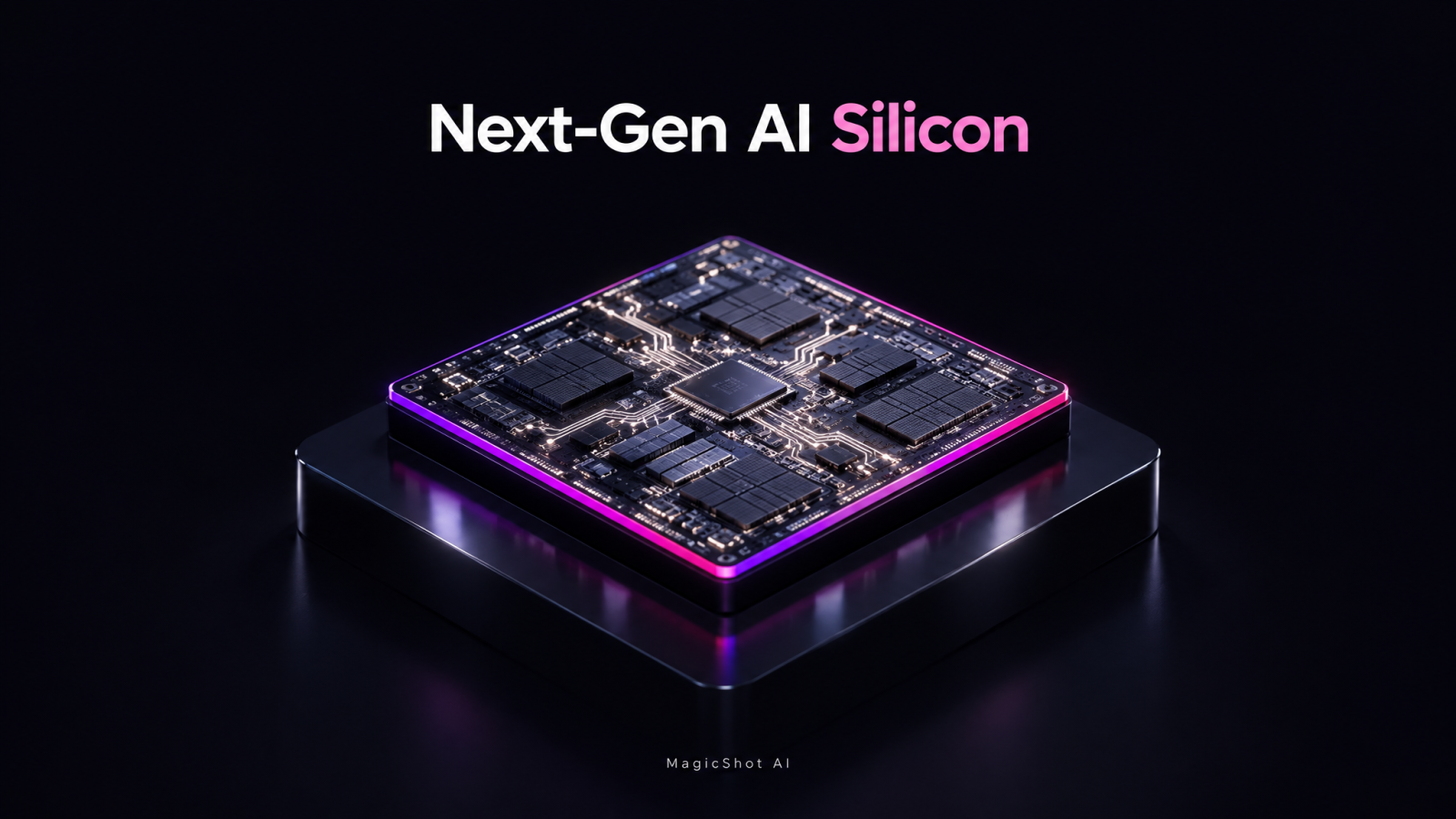
OpenAI is deepening its work with Samsung Electronics on next-generation AI chips, expanding a relationship that already spans semiconductors, memory supply, and enterprise software. The update came from Harrison Kim, General Manager of OpenAI Korea, who spoke at a press conference in Seoul on Wednesday, September 9, 2026, according to Reuters. The OpenAI Samsung chip partnership is now one of the most closely watched hardware alliances in AI, since it touches everything from custom silicon to the data centers OpenAI needs to run its models at scale.
What OpenAI said in Seoul about the Samsung chip partnership
Kim told reporters that chip development is the area where OpenAI has seen the clearest results with its Korean partner. "The most progress and gained the most recognition with Samsung Electronics is our joint production and research," Kim said, according to Reuters' report carried by BNN Bloomberg. He did not share specifications, production volumes, or a timeline for the chips, and Samsung Electronics said in a statement that it "could not confirm information related to customers," per a report from UA.News citing Asharq Al-Awsat.
That silence on details is consistent with how both companies have handled this relationship so far. Neither side has confirmed a chip name, a fabrication node, or a launch window for whatever comes out of this next round of joint research. What is confirmed is the direction: OpenAI wants custom silicon it controls, and Samsung is one of the partners helping build it.
OpenAI's push to build its own chips
This is not OpenAI's first move into semiconductors. The company unveiled its first dedicated AI chip, called Jalapeño, in June 2026, built in collaboration with Broadcom to handle AI inference, the process of running a trained model to generate answers for products like ChatGPT, according to Quartz's coverage of the Seoul announcement. Jalapeño was OpenAI's answer to a problem every large AI lab now faces: inference at ChatGPT's scale is expensive, and depending entirely on outside chip vendors limits how fast a company can optimize cost and performance together.
Samsung's role predates this week's announcement too. Last year, Samsung Electronics and SK Hynix signed letters of intent to supply memory chips for OpenAI's Stargate data center project, the company's large-scale infrastructure buildout, as reported by Quartz. Memory is a less visible part of the AI hardware story than the processors themselves, but it is just as much of a bottleneck, since large models move enormous amounts of data in and out of memory during both training and inference.
A partnership that started with a letter of intent
The chip work sits inside a broader alliance that Samsung and OpenAI first announced on October 1, 2025. At that time, OpenAI, Samsung Electronics, Samsung SDS, Samsung C&T, and Samsung Heavy Industries signed a letter of intent covering advanced semiconductors, data centers, shipbuilding, cloud services, and maritime technology, according to Samsung's own newsroom announcement. Samsung SDS in particular agreed to help design, develop, and operate Stargate data centers, and signed a reseller partnership to bring ChatGPT Enterprise to businesses in Korea.
Seen against that history, this week's news is less a new deal and more a status update on one that has been building for almost a year. Kim's comments in Seoul were the first time OpenAI has publicly said the chip side of that relationship is producing results it is willing to talk about, even in general terms.
ChatGPT Enterprise adoption is surging in South Korea
Alongside the chip news, OpenAI shared a striking adoption figure. The number of ChatGPT Enterprise users at South Korean companies and institutions was roughly 28 times higher at the end of August 2026 than a year earlier, OpenAI said, according to reporting from Inside AI. OpenAI did not disclose the absolute number of users behind that multiple, but the company said businesses are increasingly deploying AI across legal, financial, operations, marketing, and sales teams rather than leaving it to individual employees experimenting on their own.
Samsung itself is part of that shift. In June 2026, Samsung's Device eXperience division, the unit responsible for mobile phones, televisions, and home appliances, approved employees to use ChatGPT, Google's Gemini, and Anthropic's Claude as part of their daily work, Quartz reported. South Korea had the largest number of paying ChatGPT subscribers outside the United States as of late 2025, according to OpenAI's own figures cited in Inside AI's report.
OpenAI expects that adoption curve to keep climbing following the September 4, 2026 launch of GPT-6 Astra, its newest model, which the company says brings improved performance in computer use, professional tasks, science, coding, and cybersecurity, per Inside AI and Quartz. A more capable model tends to pull more enterprise use behind it, and OpenAI is clearly betting that pattern holds in Korea.
Why the Samsung chip partnership matters for the AI hardware race
The OpenAI Samsung chip partnership matters because it signals how seriously OpenAI is treating chip supply as a competitive advantage rather than a cost center to outsource entirely. Every major AI lab is trying to reduce how dependent it is on a single chip supplier, and OpenAI is no exception. Building relationships with Samsung across custom logic chips, memory, and data center infrastructure gives OpenAI more than one lever to pull as demand for inference capacity grows. It also gives Samsung a foothold in the AI buildout that goes beyond selling memory to whoever is buying, positioning the company as a design and manufacturing partner on the compute side of the business.
None of this changes overnight. Custom chip programs typically take years from research to shipping silicon, and both companies have been careful not to promise a date. What this week's Seoul press conference confirms is direction and momentum rather than a finished product. The next concrete milestone to watch for is likely a named chip, similar to how Jalapeño was introduced in June, rather than another round of "progress" language from either side.
What this means for creators using AI image and video tools
None of this is a MagicShot announcement, and the chip work itself has no direct bearing on any single AI creative tool. But the pattern behind it, more enterprise ChatGPT usage, a newer flagship model in GPT-6 Astra, and custom silicon aimed at cheaper inference, points toward the same thing creators have been seeing all year: AI models are getting faster and more capable, and access to them is becoming a normal line item for businesses rather than a novelty.
Enterprise software rollouts like the ones OpenAI is describing in South Korea rarely stay contained to one country or one department for long. When a company the size of Samsung starts approving companywide use of chatbots for legal, finance, and marketing work, it tends to set an example other manufacturers and retailers follow within a year or two. For anyone producing marketing photos, product shots, or short-form video, that trend is worth watching even if you never touch OpenAI's enterprise products directly. Tools built for creators, whether that is a text to video generator, an AI headshot generator, or a background removal tool, tend to inherit gains from the same underlying model race that stories like this one describe. If you want more background on how OpenAI's other recent moves fit together, our earlier coverage of ChatGPT Atlas, OpenAI's AI browser, covers a different piece of the same expansion.
How the chip and enterprise stories connect
OpenAI's chip ambitions and its enterprise growth in Korea are not separate stories, they are two sides of the same bet. More ChatGPT Enterprise seats mean more inference workload, and more inference workload is exactly what custom chips like Jalapeño and whatever comes out of the Samsung chip partnership are designed to handle more cheaply than off-the-shelf GPUs alone. Samsung, in turn, gets to sell into that demand from multiple angles: as a chip design and manufacturing partner, as a memory supplier for Stargate, and as a reseller of ChatGPT Enterprise to its own corporate customers in Korea.
That three-sided arrangement, chips, memory, and software distribution, is unusual even by the standards of recent AI hardware deals. Most partnerships announced by OpenAI and other labs have focused on one layer of the stack at a time. The breadth of the OpenAI Samsung chip partnership is part of why Wednesday's comments from Seoul drew attention despite Kim offering so few technical specifics.
What happens next
Both OpenAI and Samsung have left the technical details of the next-generation chips undisclosed, and neither company has committed to a public timeline. Reuters and the outlets that followed its report agree on the broad shape of the news: chip cooperation is deepening, enterprise adoption in Korea is climbing fast, and the two companies are treating this relationship as a long-term one rather than a single transaction. The next update is likely to come whenever OpenAI is ready to name a chip, the way it did with Jalapeño in June, or when Samsung confirms specifics about production.
Frequently asked questions
What is the OpenAI Samsung chip partnership?
It is an expanding hardware and enterprise software relationship between OpenAI and Samsung Electronics that now includes joint research and production of next-generation AI chips, memory supply for OpenAI's Stargate data centers, and ChatGPT Enterprise adoption across Samsung and other South Korean businesses, according to Reuters.
Is OpenAI building its own AI chips?
Yes. OpenAI unveiled its first custom AI chip, called Jalapeño, in June 2026, built with Broadcom for AI inference, the step where a trained model generates responses for products like ChatGPT. The chips discussed with Samsung this week are described as the next generation after that first chip, per Quartz's reporting.
How much has ChatGPT Enterprise grown in South Korea?
OpenAI said ChatGPT Enterprise users at South Korean companies and institutions were about 28 times higher at the end of August 2026 than a year earlier, though it did not share the absolute user count. Businesses are using it across legal, finance, marketing, and sales teams, not just individual employees.
What did Harrison Kim say about the Samsung chip partnership?
Harrison Kim, General Manager of OpenAI Korea, told reporters in Seoul on September 9, 2026 that chip development was where OpenAI has made the most progress with Samsung Electronics, calling it joint production and research on next-generation chips. He did not disclose specifications or a timeline, and Samsung declined to comment on customer details.
Does Samsung supply memory chips for OpenAI's data centers?
Yes. Samsung Electronics and SK Hynix signed letters of intent in 2025 to supply memory chips for OpenAI's Stargate data center project, part of a broader partnership that also includes Samsung SDS working on data center design and operation, according to Samsung's own newsroom announcement.
Why is South Korea important to OpenAI right now?
South Korea had the largest number of paying ChatGPT subscribers outside the United States as of late 2025, according to OpenAI, and Samsung's own Device eXperience division approved staff to use ChatGPT, Gemini, and Claude in June 2026. That combination of consumer demand and enterprise buy-in makes the country a priority market.