
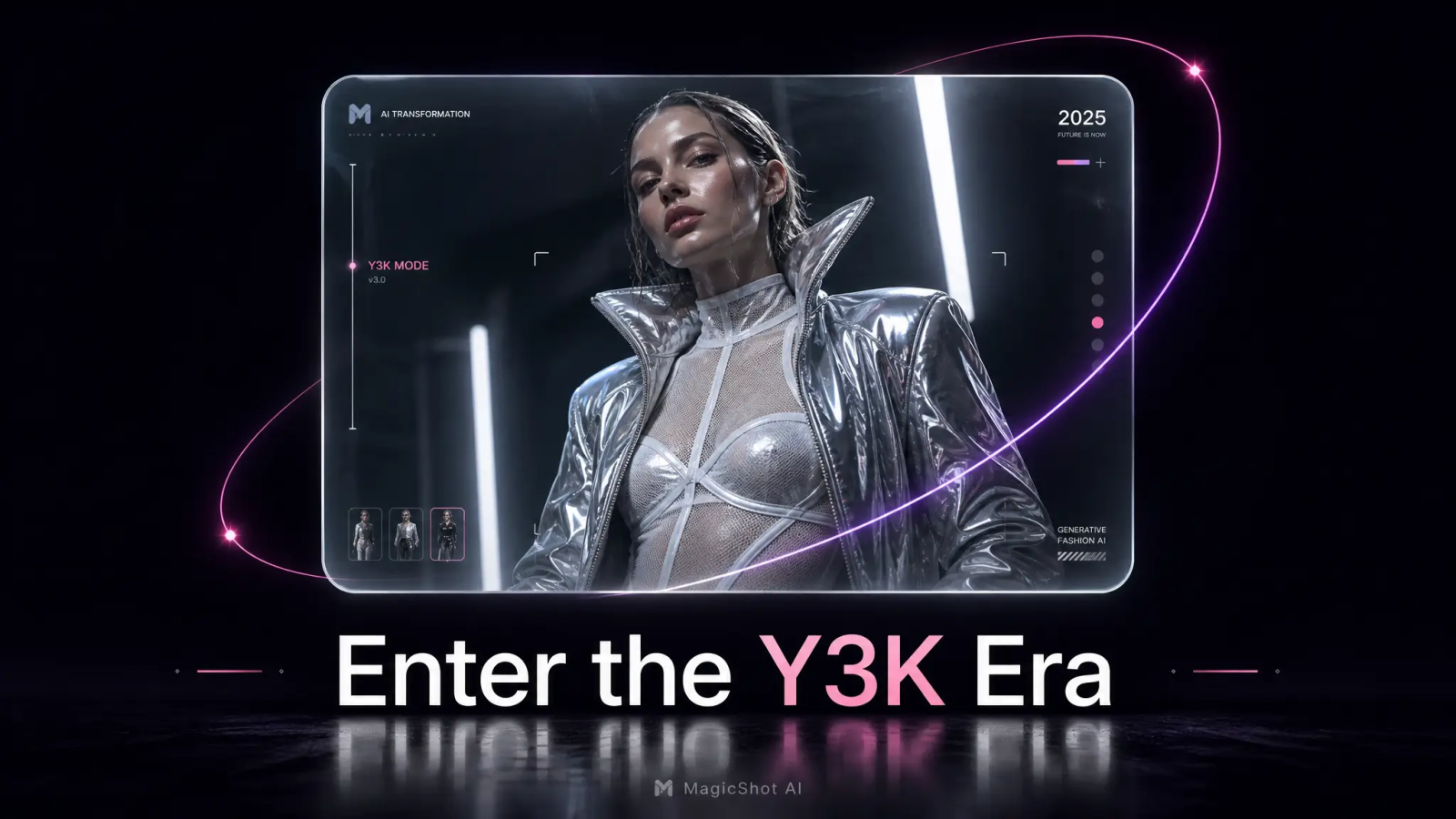
Y3K fashion is the trend that imagines the future the way people pictured it back in 2000: chrome surfaces, translucent fabric, and a color palette that reads more "space station" than "mall food court." It borrows the metallics of Y2K but drops the nostalgia. Where Y2K looked backward at itself, Y3K looks forward, or at least forward as a stylist in 2003 might have guessed it.
New to the style? Start with our explainer on what Y3K fashion is.
The problem is practical. Most closets don't have a liquid-metal jacket or a mesh top with visible seams sitting in them. Building a full y3k outfit from scratch means shopping, altering, and paying for pieces you'll likely wear once. There's a shorter path: put the look on a photo you already have. MagicShot's AI photoshoot tool generates the styling on your existing photo, so you can see the aesthetic on yourself before you spend a dollar on new clothes.
What Is the Y3K Aesthetic, Exactly?
The y3k aesthetic centers on three ideas: chrome, optimism, and layering. Chrome shows up as liquid-metal finishes, mirrored surfaces, and hardware details like buckles, zippers, and exposed seams treated as design features instead of afterthoughts. Optimism means the palette skews toward silver, ice blue, UV white, and the occasional acid green, colors that read as clean and technical rather than moody.
Layering is the third piece, and it's the one people miss. Translucent fabric, mesh, and PVC get stacked over structured basics, so you see a bodysuit through a sheer jacket or a tank under a mesh overlay. The silhouette stays sharp: structured shoulders, fitted torsos, and clean lines instead of the baggy or low-rise cuts that defined the decade the first time around.
Texture does a lot of the work here too. A matte silver jacket reads as costume. A liquid-chrome finish with visible highlights and a slight wet-look sheen reads as Y3K. That distinction is exactly why a lot of at-home attempts at the aesthetic fall flat in photos, the fabric choice and lighting have to sell the "future" part, not just the color.
Y3K Fashion vs Y2K: Same Decade Number, Different Mood
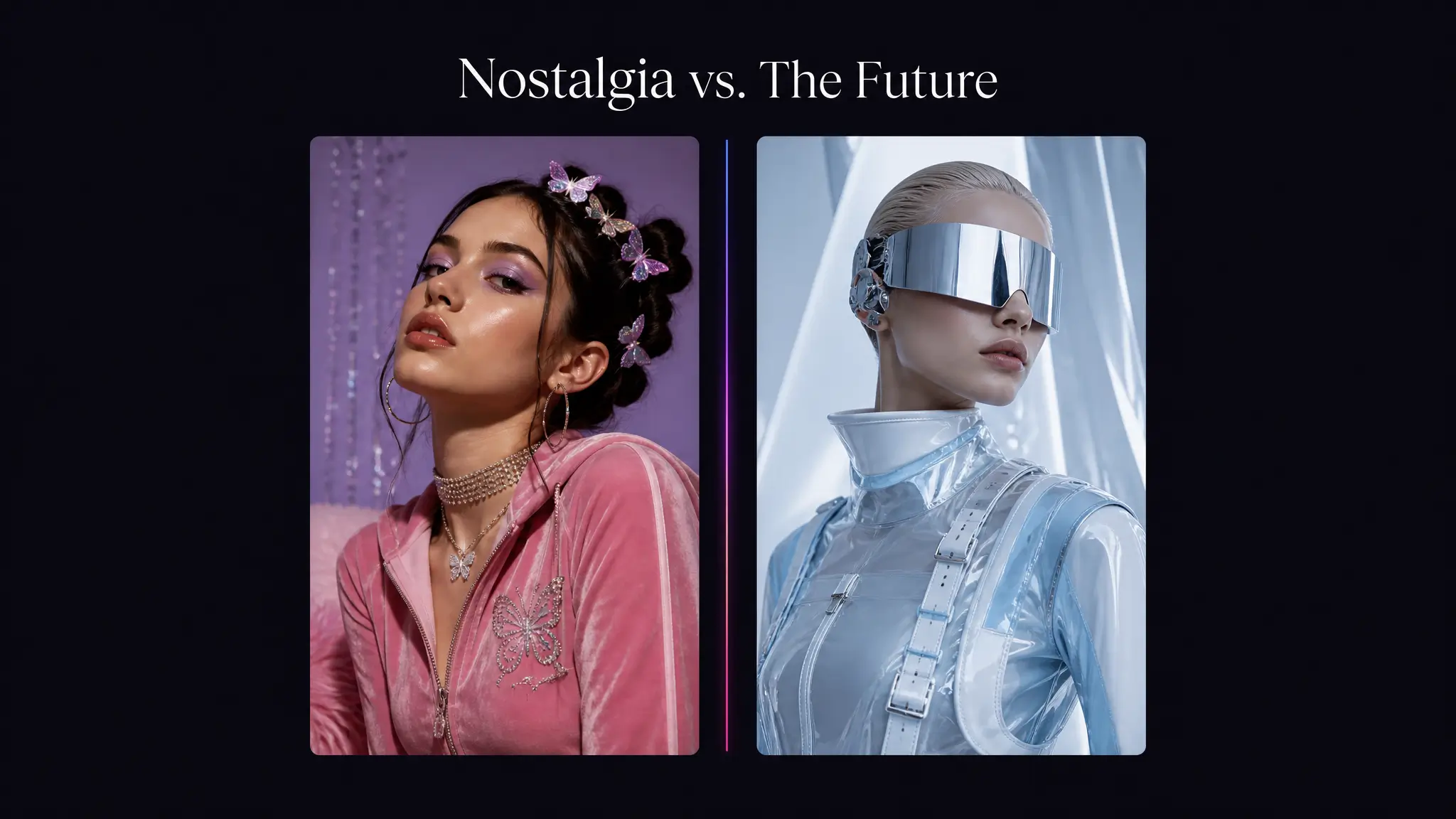
Y2K fashion is nostalgic by design. Low-rise jeans, butterfly clips, velour tracksuits, and rhinestone everything all point backward at a specific moment in pop culture. Y3K fashion points the other direction. It's what the year 2000 imagined the future would look like, filtered through today's styling. That means less denim, more technical fabric. Less logo mania, more clean surfaces.
The easiest way to tell them apart: Y2K metallics look like foil and glitter. Y3K chrome looks like polished metal or wet plastic. Y2K is playful and cluttered. Y3K is spare and a little cold on purpose. If your reference photos have rhinestones and low-rise waistbands, that's Y2K. If they have mirrored surfaces and mesh layered over structured basics, that's y3k fashion.
Accessories draw the same line. Y2K leans on tiny sunglasses, butterfly clips, and logo belts. Y3K leans on mirrored visors, chain-link hardware, and gloves or sleeves that look technical rather than decorative. Both trends borrow from the early 2000s, but they're pulling from opposite corners of that era's imagination.
What a Y3K Outfit Actually Looks Like
A workable y3k outfit usually combines a few of these: a metallic or PVC jacket with a sharp shoulder line, a mesh or sheer top layered over a fitted bodysuit, cargo or technical pants in silver or white, and accessories with visible hardware, chain link belts, mirrored sunglasses, chunky boots. Hair and makeup lean into the same mood: slicked-back styles, metallic eyeshadow, or a single graphic accent like a chrome lip.
Color discipline matters more than volume of pieces. Two or three items in a tight silver-to-white range, plus one dark anchor piece like black cargo pants or a black bodysuit, reads more intentional than five competing metallic tones. That's also the palette that photographs cleanest, since chrome and mesh already do a lot of visual work on their own.
None of that requires a closet overhaul if you're testing the look before committing to it. A single reference photo, generated on your own face and body, tells you fast whether the palette works for your coloring and which pieces are worth actually buying.
What an AI Outfit Changer Does With a Y3K Look
An ai outfit changer takes a photo of you and swaps the clothing while keeping your face, pose, and background intact. Upload a photo, describe or select the y3k styling you want, chrome jacket, mesh layers, silver palette, and the tool generates the outfit on your existing image. There's no reshoot, no stylist call, and no ordering three sizes of a jacket to find out the color reads more silver-gray than chrome under real light.
This matters most for anyone testing a trend before going all in. Content creators, cosplayers, and anyone shooting for social feeds can preview a y3k outfit on themselves in minutes instead of building it piece by piece and hoping the final photo matches what they pictured. It also solves a smaller, more common problem: you already have a decent photo of yourself, and reshooting it just to try a new style is rarely worth the effort.
Clothes Changer AI vs Buying a New Wardrobe
The alternative to clothes changer ai is the traditional route: source the pieces, try them on, shoot the photo, and hope the lighting cooperates. That works, but it's slow and it's expensive if the trend fades before you've worn the outfit twice. Chrome fabric and mesh layering aren't cheap, and they're not exactly office-appropriate the rest of the week.
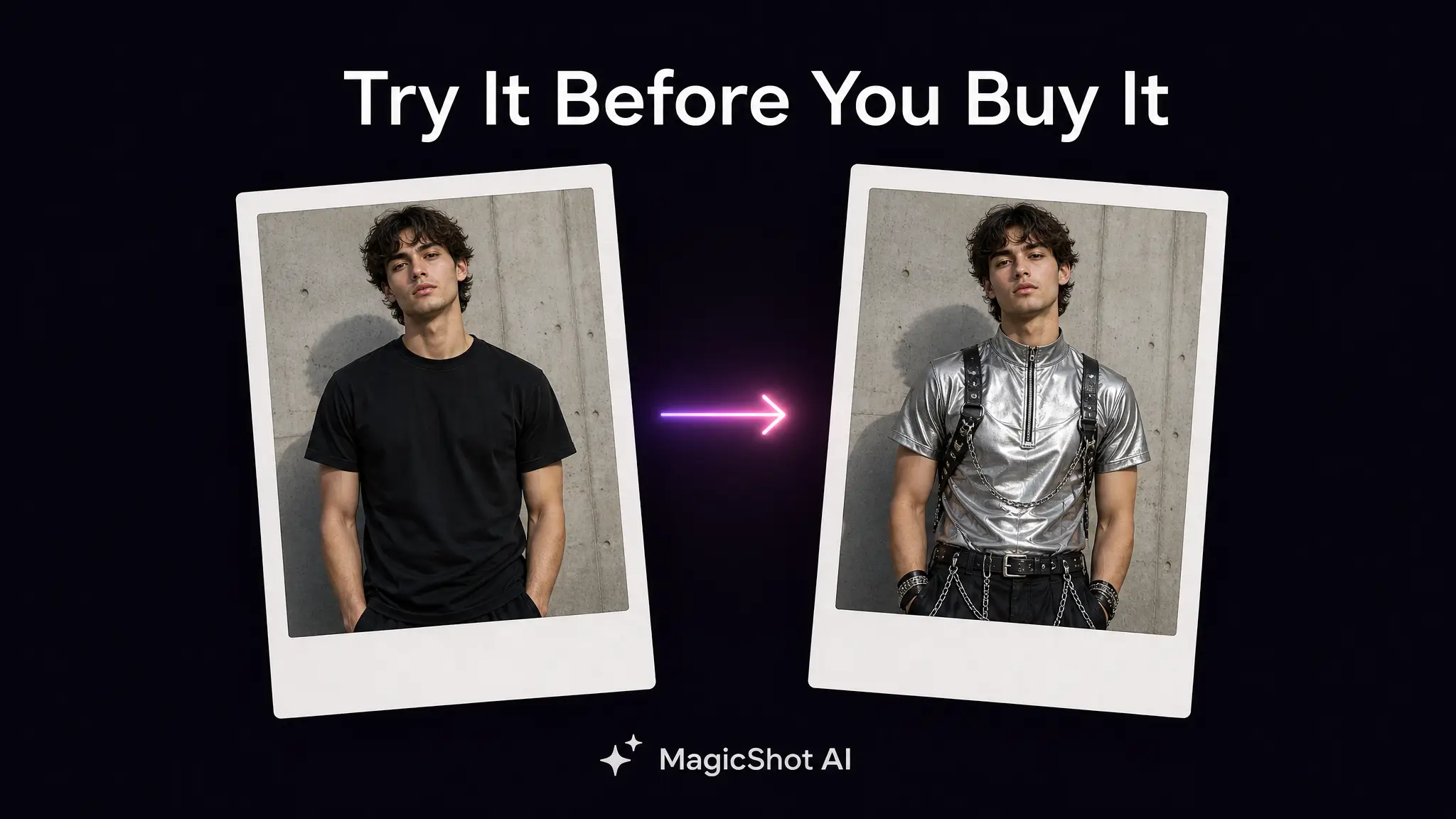
Running the look through an AI tool first turns the decision around. You see the finished photo, decide if the aesthetic actually suits your coloring and body type, and then buy with intent instead of guessing. It's the same logic behind MagicShot's Fashion Try-On tool, which lets you preview specific garments on your own photo before you commit to buying them. Skip the guesswork, keep the receipt for what you actually end up wanting.
Choosing an AI Clothes Changer App for Y3K Photos
Not every ai clothes changer app handles a look this specific. Chrome finishes and translucent layers ask more of a model than a plain color swap does, since the tool has to render reflections, transparency, and layered fabric convincingly. Look for a tool built on multiple image models rather than one generic engine, since different styles respond better to different underlying models.
MagicShot runs on 500+ AI models across 86+ tools under a single plan, which means a y3k outfit generation and, say, a background cleanup or an image upscale for the final post all happen in the same place instead of across five different apps. That's the practical case for picking one platform over stitching together separate tools for each step, especially if the trend photo is going straight to a social post where resolution and background actually matter.
Putting It Together
Y3K fashion rewards people who experiment before they commit. The aesthetic is specific enough that a photo, not a mood board, is the fastest way to know if it works for you. Upload a current photo, run it through MagicShot's AI photoshoot tool, and see the chrome, the layers, and the palette on yourself before you buy a single piece of mesh.