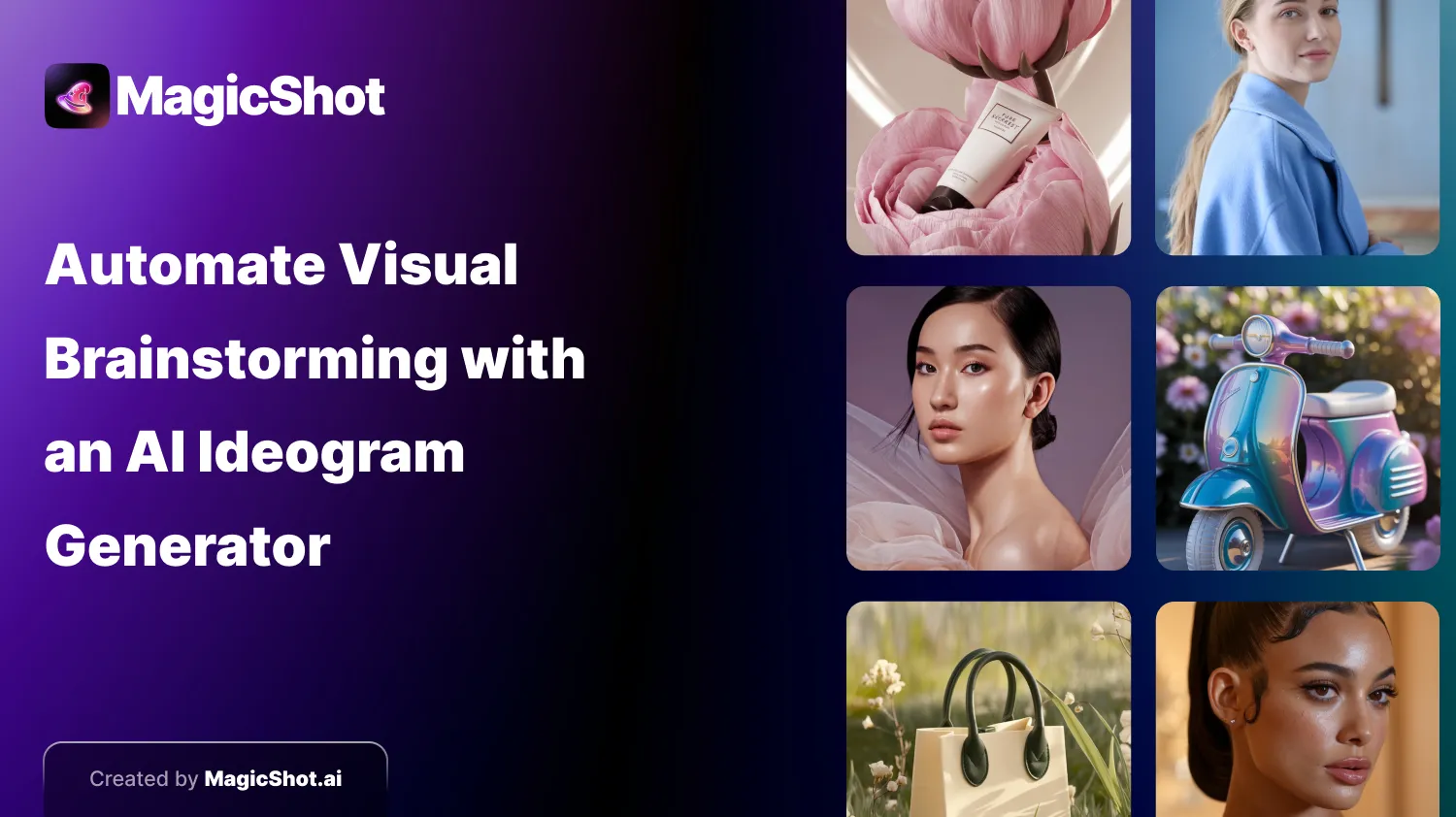
Most AI image models still mangle text. Ask for a poster that says "Open Mic Night" and you get "Opne Mlc Nigth" in a very confident font. Ideogram was built to fix that, and it is the reason designers keep coming back to it. If you want to try that style of model, the Ideogram generator on MagicShot runs it from a plain prompt.
What Ideogram actually is
Ideogram is a text-to-image model from a company of the same name, started by former Google Brain researchers. Its calling card is typography: it is one of the few generators that can put short phrases, logos and lettering into an image and get most of the spelling right. Quality still varies, so expect to run a prompt a few times.
It is not a mind-mapping tool, and it has nothing to do with the linguistic term "ideogram" (a symbol that stands for an idea, like a road sign). That confusion is common, because the name suggests both.
Where it earns its place
Posters and flyers. A headline plus a visual, in one pass. You still tidy the layout in a design tool, but the first draft arrives with real words on it.
Social graphics. Quote cards, announcement banners and thumbnails where the words are half the point.
Logo and wordmark ideas. Good for exploring directions quickly. Treat the output as a sketch, then redraw it as a proper vector file.
Merch and sticker concepts. Short slogans on shirts or stickers come out far more readable than with general-purpose models.
Product mockups. Packaging with a brand name on it, for early pitches rather than final artwork.
Prompting tips that matter
Put the exact text in quotation marks and keep it short. Three to five words behaves far better than a full sentence. Then describe the style and the layout separately: "bold hand-lettered headline at the top, vintage concert poster, warm orange and cream palette".
Name the typeface feel rather than a font brand. "Chunky retro serif" or "thin geometric sans" gives the model something it can actually act on. If a word keeps coming out wrong, spell it again in the prompt or shorten it.
Change one thing per attempt. If the lettering is right but the colours are off, only edit the colours. Rewriting the whole prompt throws away what was working.
Where it falls short
Long paragraphs of text still break. Small print is unreliable. Hands, crowded scenes and exact brand colours can drift, and the model will not follow a layout grid the way a design tool does. For anything going to print, check every letter by eye.
Also check usage rights before using output commercially, since terms differ between plans and platforms.
Ideogram or a general model?
If the image needs words, start with Ideogram. If it is a photo-style portrait or a painterly scene with no text, a general model such as Flux or Midjourney may give you better results. Our AI art generator is a good place to compare styles side by side.