

Anthropic released Claude Fable 5.1 and a restricted twin, Claude Mythos 5.1, on September 1, 2026, three months after the original Fable 5 line shipped. The headline change isn't a new benchmark record, though there is one of those too. It's the price of memory: Anthropic cut the cost of cache reads by 75%, a move aimed squarely at the companies running AI agents that reread the same code, policies, or conversation history thousands of times a day.
The release lands at a moment when enterprise AI budgets are under real scrutiny, and Anthropic is framing Fable 5.1 as an answer to three specific complaints it says it has heard from customers: price, data retention, and safeguards that flag too many false positives. Here's what actually shipped, what it costs, and what breaks if you're already building on Fable 5.
What Is Claude Fable 5.1?
Claude Fable 5.1 is Anthropic's updated flagship model for coding, research, and long-running agentic work, built on top of the Fable 5 architecture launched in June 2026. Anthropic describes the pair as the world's most advanced models for coding and knowledge work, with Fable 5.1 built for "your most ambitious, long-running projects" that avoids shortcuts and works through root causes rather than symptoms.
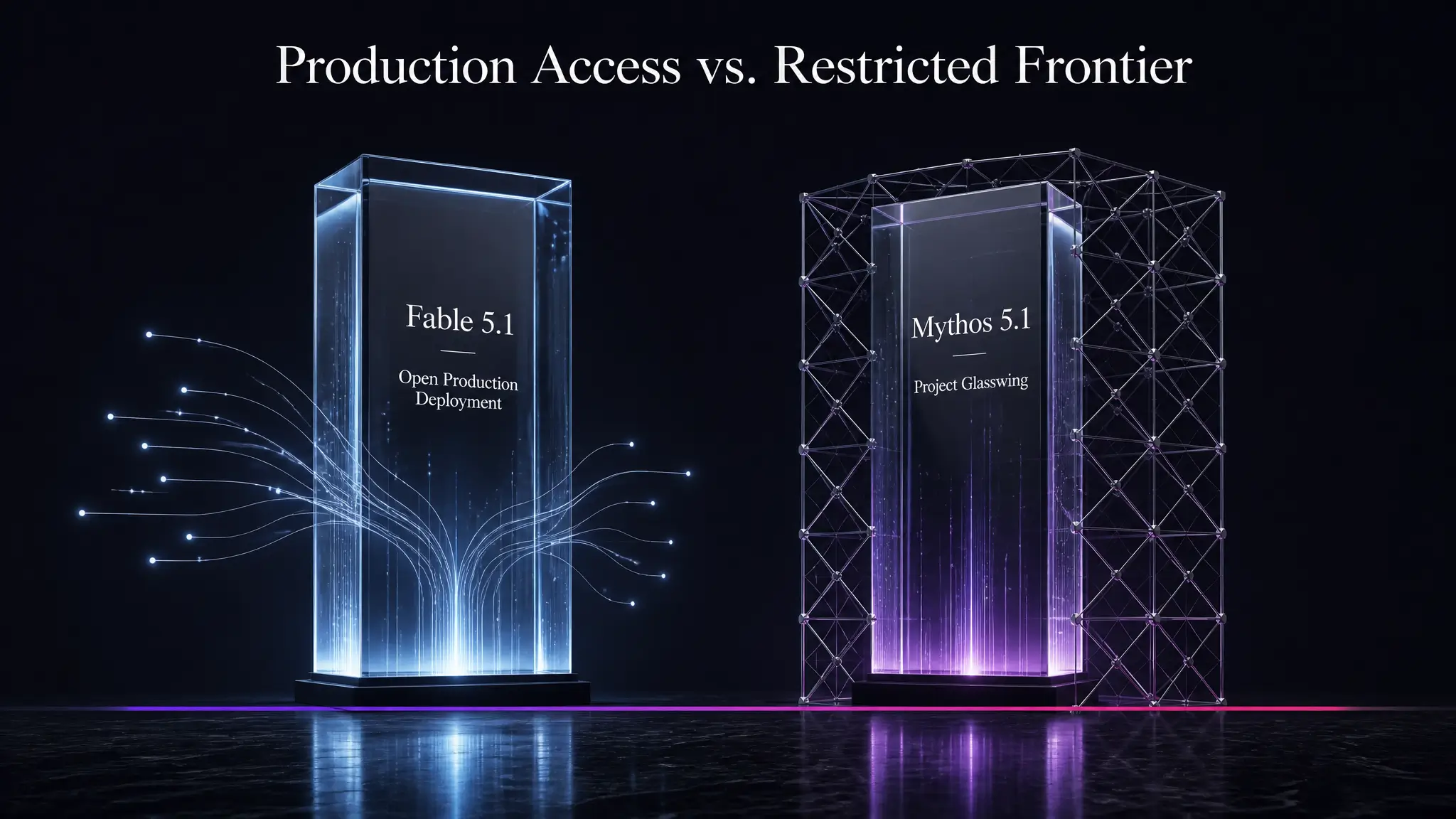
Claude Mythos 5.1 is not a separate model in the technical sense. Claude Fable 5.1 and Claude Mythos 5.1 are the same model, but with different levels of safeguards, according to Anthropic. Fable 5.1 is generally available through the standard API, Claude.ai, Claude Code, and cloud partners. Mythos 5.1 is walled off behind what Anthropic calls Project Glasswing, a restricted access program limited to vetted cybersecurity and life-sciences organizations that need capabilities normally constrained by production safeguards.
The 75% Cache Read Price Cut, Explained
Standard token pricing for Claude Fable 5.1 did not move. It still costs $10 per million input tokens and $50 per million output tokens, unchanged from Fable 5. What changed is the price of reusing context the model has already processed. Cache reads dropped from $1.00 per million tokens to $0.25 per million, a 75% reduction, while cache writes are $12.50 for the 5 minute window and $20 for the 1 hour window, and the Batch API takes 50% off input and output.
That single line item matters more than it looks. Caching is what lets a model avoid re-billing full price every time it revisits a codebase, a product catalog, or a long agent transcript. Anthropic says the practical effect is that Fable 5.1 will cost an estimated 25% less than Fable 5 for typical workloads, wherever usage is billed by token, and up to approximately 45% less for highly agentic work. VentureBeat put the new cache-read rate in context, noting Anthropic cut a Fable 5.1 cache hit to just $0.25 on input, down from $1.00 for Fable 5, which works out to just 2.5% of Fable's normal input-token price of $10, rather than the 10% multiplier used by most other Claude models.
Benchmark Gains: Terminal-Bench-Science Score More Than Doubles
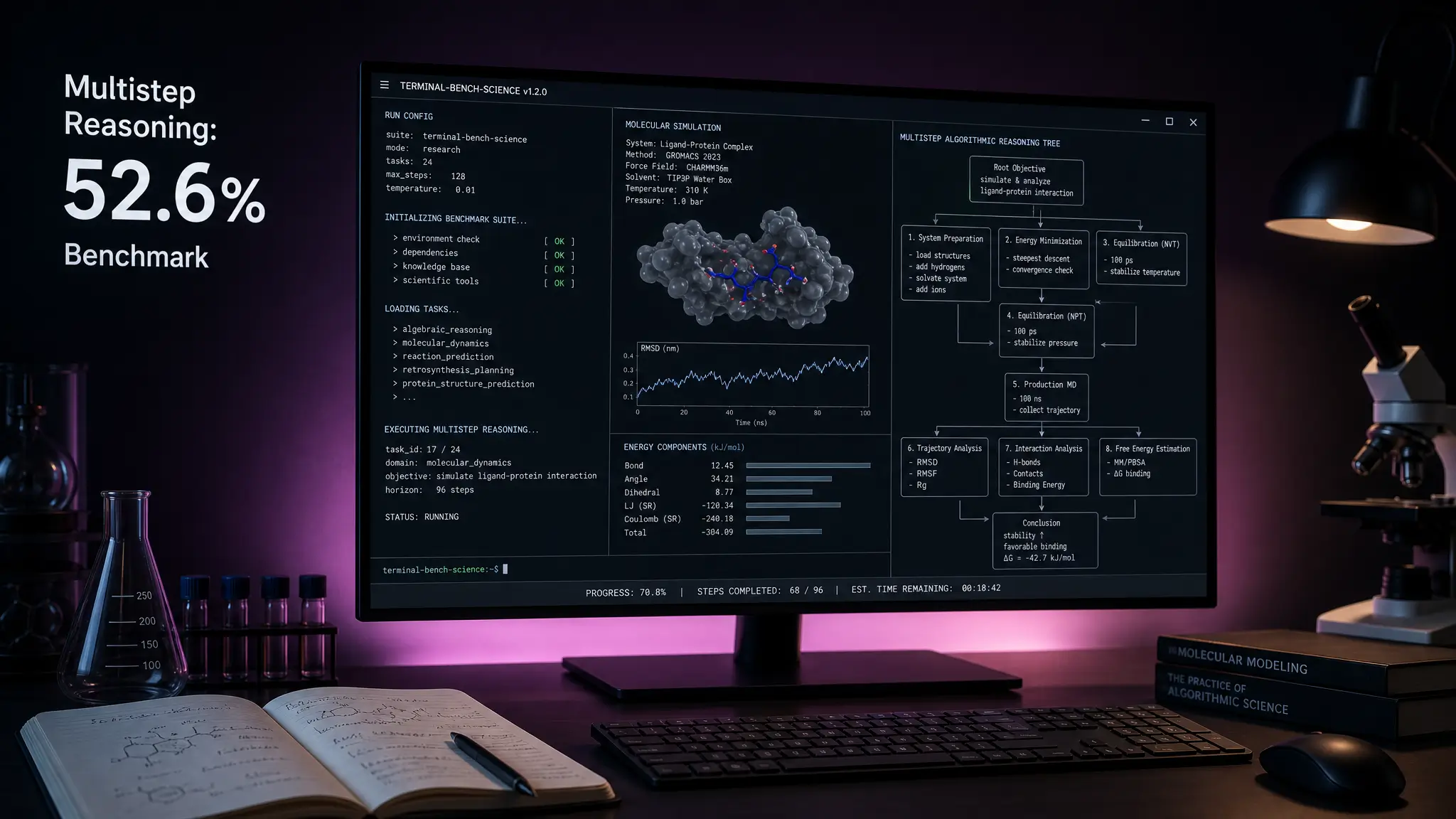
Anthropic is pitching Fable 5.1 primarily as a gain in sustained, multistep problem-solving rather than a one-shot answer generator. The clearest evidence is on Terminal-Bench-Science 0.1, a test of agentic scientific research. According to VentureBeat's reporting on Anthropic's own evaluation set, on Terminal-Bench-Science 0.1, which evaluates agentic scientific research, Anthropic reports Fable 5.1 scoring 52.6%, compared with 24.7% for Fable 5, 29.0% for Opus 5 and 22.4% for GPT-5.6 Sol.
Coding benchmarks moved too, though less dramatically. Reporting from gHacks cites Anthropic's numbers showing Fable 5.1 scored 55.8% on Terminal-Bench 4.0, a benchmark for command-line coding work, compared with 42% for Fable 5, while Mythos 5.1 scored 60.9% under its more permissive safety settings. The same reporting confirmed the science score jump, noting Anthropic reported 52.6% for Fable 5.1, more than double Fable 5's 24.7% on Terminal-Bench-Science.
How Fable 5.1 Fits Alongside Opus 5
Anthropic isn't suggesting every customer needs to move up to Fable 5.1. Coverage from eWeek notes that Anthropic positions Claude Opus 5 as approaching Fable 5 performance at roughly half the price, aiming that model at general enterprise AI, coding, research, and agent work, while reserving Fable 5.1 for the harder end of that spectrum. That tiered structure means the real decision for most teams isn't which model is newest, it's which model is cheapest for the accuracy bar a specific workflow needs. Anthropic's own advice, to start with Opus 5 and step up to Fable 5.1 only when evaluations fall short, backs that up.
Zero data retention terms also carry over unevenly between the tiers. Reporting from The Register notes that enterprises don't receive zero data retention automatically with Fable 5.1, they have to apply for it, and the arrangement carries a 30-day retention window in the interim. That detail is easy to miss in the pricing headlines, but it matters for regulated industries that expected default ZDR the moment they upgraded.
Breaking Changes for Developers
Anthropic's own documentation is blunt about what will break for teams migrating from Fable 5. Per the platform docs, if you already call Claude Fable 5, three changes are breaking: forced tool use returns an error, earlier models can't read its thinking blocks, and editing earlier turns invalidates thinking blocks. That last point matters for anyone building conversational agents that let users go back and edit a previous message: doing so now discards the model's prior reasoning trace rather than silently reusing it.
Anthropic's guidance on when to actually reach for Fable 5.1 is also specific. The docs recommend starting with Claude Opus 5 for most workloads, and using Claude Fable 5.1 for demanding reasoning and long-horizon agentic work, or when evals on Opus 5 at higher effort still fall short. In other words, Anthropic isn't positioning this as an across-the-board upgrade path. It's a model reserved for the harder, slower jobs.
For teams already in production, the effort parameter is worth revisiting. Anthropic's migration guide notes that Fable 5.1's gains over Fable 5 are largest at high and max, but those levels also add thinking time, a tradeoff worth testing rather than assuming.
Data Retention and Enterprise Frontier Safeguards
The other major thread in this release is enterprise trust. Anthropic is introducing a new system called Enterprise Frontier Safeguards, or EFS, which it describes as combining the privacy of zero data retention (ZDR) with state-of-the-art safeguards for detecting misuse, working by storing data in cloud infrastructure controlled by the customer, not Anthropic. The company says EFS will be rolling out to customers in phases, starting later this fall, and that it was built in close collaboration with more than 100 customers in industries like financial services, healthcare, manufacturing, telecom, law, and retail.
To bridge the gap until EFS is ready, Anthropic is backing off its data retention requirement. Reporting from CX Today notes Anthropic is backing away from its data retention requirement for enterprise customers with the launch of Claude Fable 5.1 and Claude Mythos 5.1, after pushback from enterprises that the policy made it difficult to use the company's most capable models with sensitive information. AWS's own announcement confirms the mechanics on its platform: if you are an EFS-eligible customer, you can use Claude Fable 5 and Claude Fable 5.1 with zero data retention (ZDR) on Amazon Bedrock and Claude Platform on AWS.
On the security side, MacRumors reported that safeguards for Fable 5.1 have been improved, and Claude Code users should see around 60 percent fewer cybersecurity false positives. The same reporting notes a new capability boundary: Anthropic says Fable 5.1 can now be used to discover software vulnerabilities, but not develop exploits for them. Anthropic is also rolling out watermarking, with MacRumors noting Fable 5.1 includes invisible watermarking for text generated by Claude, and Anthropic is rolling out a detection API in a private preview.
Availability and Access
Fable 5.1 is live now via the model ID claude-fable-5-1 across the Claude API, Claude.ai, Claude Code, Amazon Bedrock, and Google Cloud. Mythos 5.1 access is narrower. MacRumors reported that Fable 5.1 is available to everyone, but Mythos 5.1 is limited to U.S. companies and individuals participating in Anthropic's trusted access programs, and that Anthropic is opening a new Life Sciences Verification Program that allows Mythos 5.1's advanced biology capabilities to be used for scientific research, with open enrollment for scientists coming soon.
Anthropic has also classified the new model under stricter internal review. AWS's blog notes that Anthropic has designated Fable 5.1 a Covered Model, a category of Claude models that carry additional data retention, safety review, and access policies wherever they're offered.
What Developers Are Saying About the Migration
Independent developer coverage suggests the practical migration is smaller than the breaking-changes list implies. One developer newsletter summarizing Anthropic's migration guide described the move as effectively a model ID swap, from claude-fable-5 to claude-fable-5-1, with five recommended follow-up checks: stripping forced tool_choice calls, confirming message history stays append-only, re-tuning the effort parameter now that it can change mid-conversation, watching agent loops for a new one-call-per-turn pattern, and re-running evaluations instead of assuming the published behavior differences cover every use case. Refusal handling is unchanged: Fable 5.1 can still return a refusal with an HTTP 200 status and a stop_details object naming the policy area involved, the same pattern Fable 5 used.
One operational quirk worth flagging for anyone comparing outputs across surfaces: coverage from ai.rs notes that Claude Code runs Fable 5.1 at high effort by default, while Claude.ai and Claude Cowork run it at medium. Teams that see inconsistent answers to the same prompt across those surfaces should check the effort setting before assuming a model regression.
Why This Claude Fable 5.1 Release Matters
Taken together, the Fable 5.1 launch reads less like a capability leap and more like Anthropic tightening the economics and trust story around its most expensive model tier. The pricing move targets a specific pain point: agentic systems that burn budget re-processing the same context turn after turn. The benchmark story, especially the jump on agentic science tasks, signals Anthropic is chasing longer, more autonomous workflows rather than faster single-turn answers. And the EFS announcement suggests enterprise data governance has become as competitive a battleground as raw model performance.
For teams building AI-powered products, none of this changes overnight, but it's a reminder of how fast the underlying models keep shifting. Whether you're generating work with an AI art generator, producing clips with a text to video tool, or scripting voiceovers with text to speech, the pace of model updates from labs like Anthropic is a good reminder to keep evaluating the tools in your own stack rather than assuming last quarter's pick is still the best one.
The Bottom Line
Claude Fable 5.1 and Claude Mythos 5.1 shipped September 1, 2026, keeping standard token pricing flat while cutting cache-read costs by 75%, nearly doubling Anthropic's own agentic science benchmark score, and introducing Enterprise Frontier Safeguards to address enterprise data retention concerns. Developers already on Fable 5 should check the three breaking changes around forced tool use and thinking blocks before migrating, and enterprise teams should watch for the phased EFS rollout later this fall.