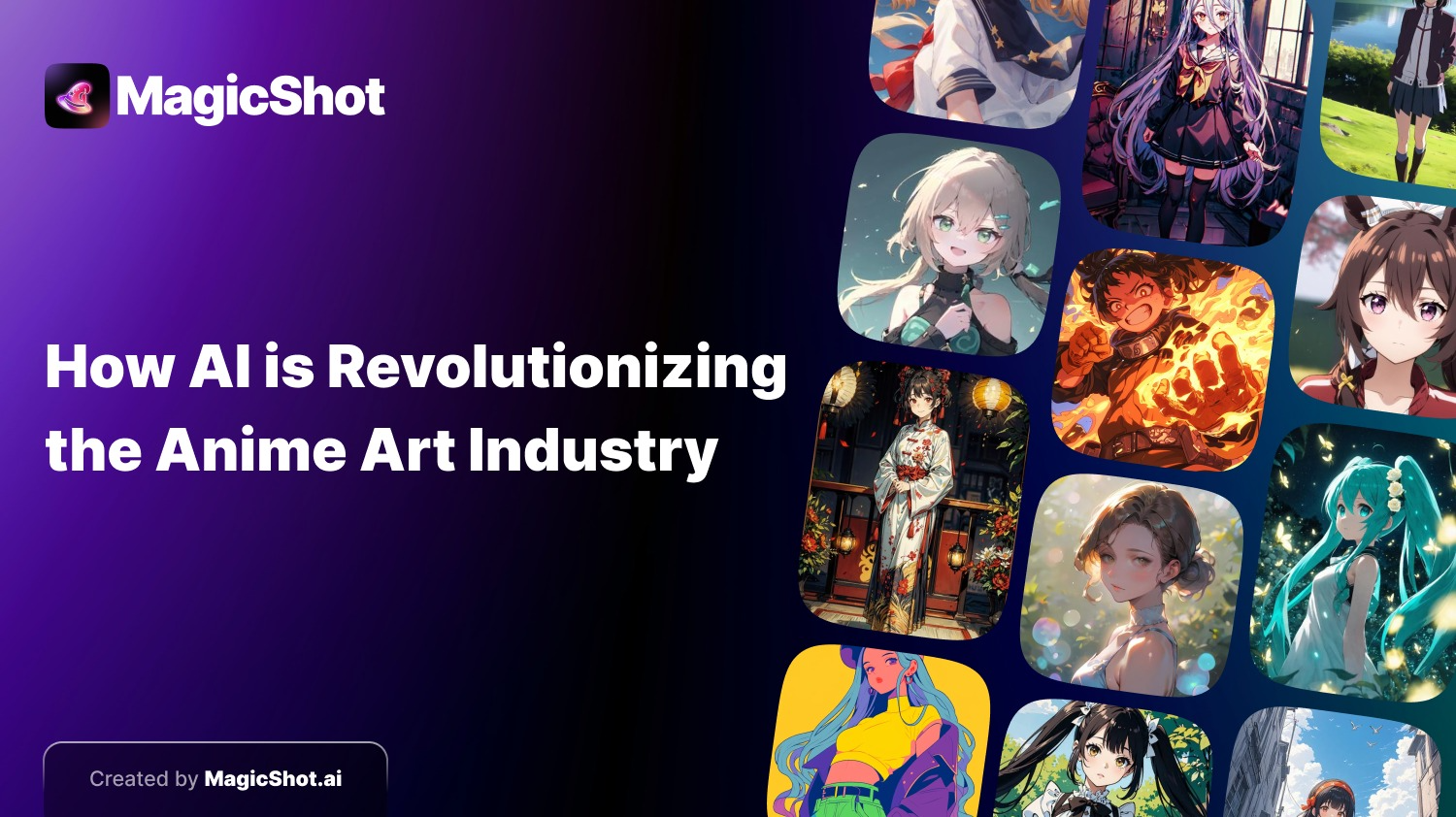
Anime is one of the most hand-crafted forms of animation still made at scale, and it is also one of the most overworked. That is the setting AI walks into: a medium with tight deadlines, thousands of drawings per episode and a strong sense of craft. This article looks at where AI is actually being used in anime art, where it is not welcome, and what that means for artists and fans. If you want to try the visual side yourself, the anime generator turns photos into anime-style art.
How Anime Is Made (and Why It Is Slow)
A TV episode passes through many hands: character designers, key animators who draw the important frames, in-between animators who draw the frames in the middle, background artists, colorists and compositors. Even a 24-minute episode needs thousands of drawings, and production schedules are famously tight. That pressure is why studios look for ways to automate repetitive work.
Where AI Is Used in Anime Art Today
Character concepts: generators speed up early exploration of outfits, hairstyles and color schemes, which artists then redraw by hand.
Backgrounds and reference: AI can produce draft backgrounds or mood references. A 2023 Netflix Japan short drew public debate for using AI-generated backgrounds, showing how divisive the practice is.
In-betweening and cleanup: software can propose the frames between two key drawings, which artists correct. This is one of the most promising uses because it replaces repetition, not design.
Color assistance: tools can fill and suggest palettes across scenes for consistency.
Style transfer: converting a photo or video into an anime look, as in an anime filter.
What AI Does Not Replace
Anime's appeal rests on timing, acting, framing and the personal style of the artists. Those depend on human decisions that current AI tools do not make well. The more distinctive the work, the less a generic model can imitate it without looking generic.
Benefits Artists Point To
Less time on repetitive frames, so more time for key animation and direction.
Faster pre-production and idea testing.
A lower barrier for independent creators who cannot afford a full team.
The Concerns That Are Not Going Away
Jobs and pay. Animators are already underpaid in many studios, and in-between and background roles are the ones most exposed to automation.
Training data and copyright. Many models were trained on existing artwork without permission, and artists object to styles being copied.
Originality. Output tuned to popular styles tends to look alike.
Credit and transparency. Fans and artists want to know where AI was used.
What to Expect Next
The likely path is assistive use: AI handling cleanup and drafts under artists' control, while directors and key artists keep creative authority. Studios that are open about how they use it, and that pay and credit artists fairly, will probably face less backlash.
Try the Visual Side Yourself
If you just want to see yourself or a photo as anime art, upload an image to the anime generator and compare a couple of styles. You can also download the MagicShot app.