
Apple announced the Apple Watch Series 12 on September 9, 2026, and the headline change is not on the outside of the case. According to Apple's official announcement, the watch and its larger sibling, Apple Watch Ultra 4, both ship with an all-new Apple Watch Series 12 Health Sensing System built around a new S11 chip. It is a redesigned sensor stack that reads your heart far more often than any Apple Watch before it, and feeds that data into new Apple Intelligence features on the wrist.
Key takeaways
The Apple Watch Series 12 Health Sensing System uses redesigned optical and electrical heart sensors to measure heart rate every five seconds throughout the day, a shift from occasional spot checks to continuous passive tracking.
The new sensor data powers a readiness score and a redesigned Health app, plus Siri AI on the wrist through watchOS 27, which Apple says starts rolling out as a beta on September 14, 2026.
Apple Watch Series 12 starts at $399 and Apple Watch Ultra 4 starts at $799, with both models available for preorder now and in stores on September 18, 2026.
The case design and display are largely unchanged from Series 11, so this year's real story is inside the watch, not on your wrist.
What is the Apple Watch Series 12 Health Sensing System?
It is a redesigned heart sensor package built into new hardware, not a new app or a subscription add-on. As MacRumors reported from Apple's event, the Apple Watch Series 12 and Apple Watch Ultra 4 feature a redesigned health sensing system with a larger electrode surface for improved skin contact during ECG readings, photodiodes arranged in a ring to capture light more efficiently, and larger, more power-efficient green LEDs for heart rate tracking. Apple is framing this as a hardware-first upgrade, paired with the new S11 chip that handles the processing behind the scenes.
How the five-second heart rate sensor works
The practical change is frequency: the watch now checks your pulse constantly instead of every so often. Apple's newsroom post states that with larger, power-efficient green LEDs on the optical heart sensor, Apple Watch Series 12 now measures heart rate every five seconds, all day long. Heart rate variability gets a similar boost. Coverage from The Apple Post notes that heart rate variability can now be measured up to 24 times more frequently, and that the added data feeds into new daytime and overnight Vitals views and helps power Apple's new Readiness feature. Apple also backs its sensor claims with in-house testing: according to MacRumors, Apple says its redesigned sensing system delivers the most accurate heart rate tracking of any wearable, citing a study involving hundreds of participants running, cycling, and performing HIIT workouts, with an ECG chest strap used as the reference.
A new readiness score and a redesigned Health app
All that extra sensor data needed somewhere to live, so Apple built a new score around it. Apple's own announcement on the health and fitness update states that the all-new Apple Watch Health Sensing System enables a new readiness score and higher-frequency HRV, and a redesigned Health app offers users intelligent and actionable insights. In practice, the watch is trying to tell you each morning whether your body looks recovered enough for a hard workout or a light day, based on overnight heart rate, HRV, and sleep rather than a single morning reading.
Apple Intelligence and Siri AI arrive on the wrist
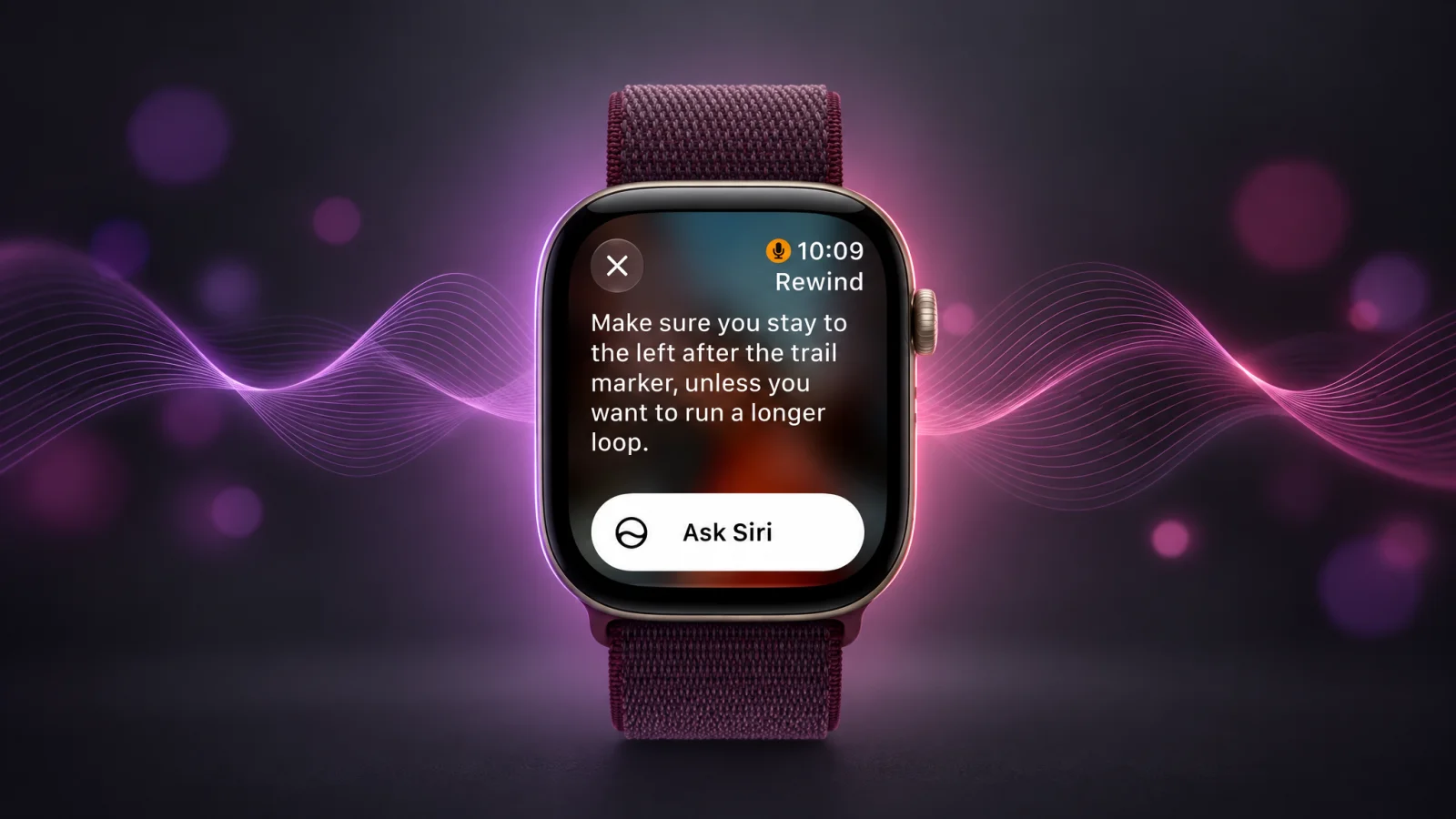
The S11 chip is not only there for sensors, it is also Apple's on-device AI engine for the watch this generation. Per MacTech, Kaiann Drance, Apple's vice president of Worldwide Apple Watch Product Marketing, said the S11 chip also enables new Audio Intelligence features arriving later this year, built to help users remember key moments from conversations and stay alert to important sounds, with privacy, security, and accessibility built in. MacTech also reports that with watchOS 27, Apple Intelligence powers Siri AI on the Apple Watch. The rollout is staggered by language: reporting from Apple World Today says Siri AI is rolling out with watchOS 27 as a beta on September 14 for users set to English, with French, Japanese, Korean, Portuguese, and Spanish support coming in October.
Design stays familiar, the upgrade is internal
If you were hoping for a new look, Series 12 will feel familiar in your hand. MacRumors' event coverage notes that Bloomberg's Mark Gurman had reported ahead of the announcement that he did not expect the Series 12 or Ultra 4 to bring major design changes compared with Series 11 and Ultra 3, despite earlier rumors of Touch ID arriving on the watch. That held up: same case language, same display, with the real engineering work happening under the glass in the sensor ring and the new chip.
Price, availability, and how Series 12 compares with Ultra 4
Pricing held steady year over year. MacRumors confirms Apple Watch Series 12 starts at $399, while Apple Watch Ultra 4 starts at $799, and that both models are available to preorder today with a launch date of September 18. The rollout is broad from day one: MacTech's coverage says customers in Australia, Canada, France, Germany, India, Japan, the UAE, the UK, the U.S., and more than 50 other countries and regions can preorder Apple Watch Series 12 immediately, with in-store availability beginning September 18. Ultra 4 gets the same Health Sensing System, so the choice between the two watches still comes down to battery life, ruggedness, and Action Button features rather than heart tracking accuracy.
What this means for creators working with AI image and video tools
Apple's pitch is that useful AI should run quietly on a device you already wear, turning raw sensor data into a readiness score or a conversation recap without you asking for it. That same idea, AI doing the assembly work so people can skip the manual labor, is what has reshaped photo and video production over the past few years. Creators who once booked a studio for headshots now run an AI headshot generator instead, and sellers who once hired a videographer for a product clip now build one straight from a product photo with an image to video tool. Apple building conversation recaps into a watch and a platform like MagicShot letting someone turn a script into narration with text to speech are different products solving different problems, but they point at the same shift: AI is increasingly doing the first draft, and a person decides what to keep. The news out of Cupertino is less about wearables and more a reminder that on-device and on-demand AI are now baseline expectations across consumer tech, not optional add-ons.