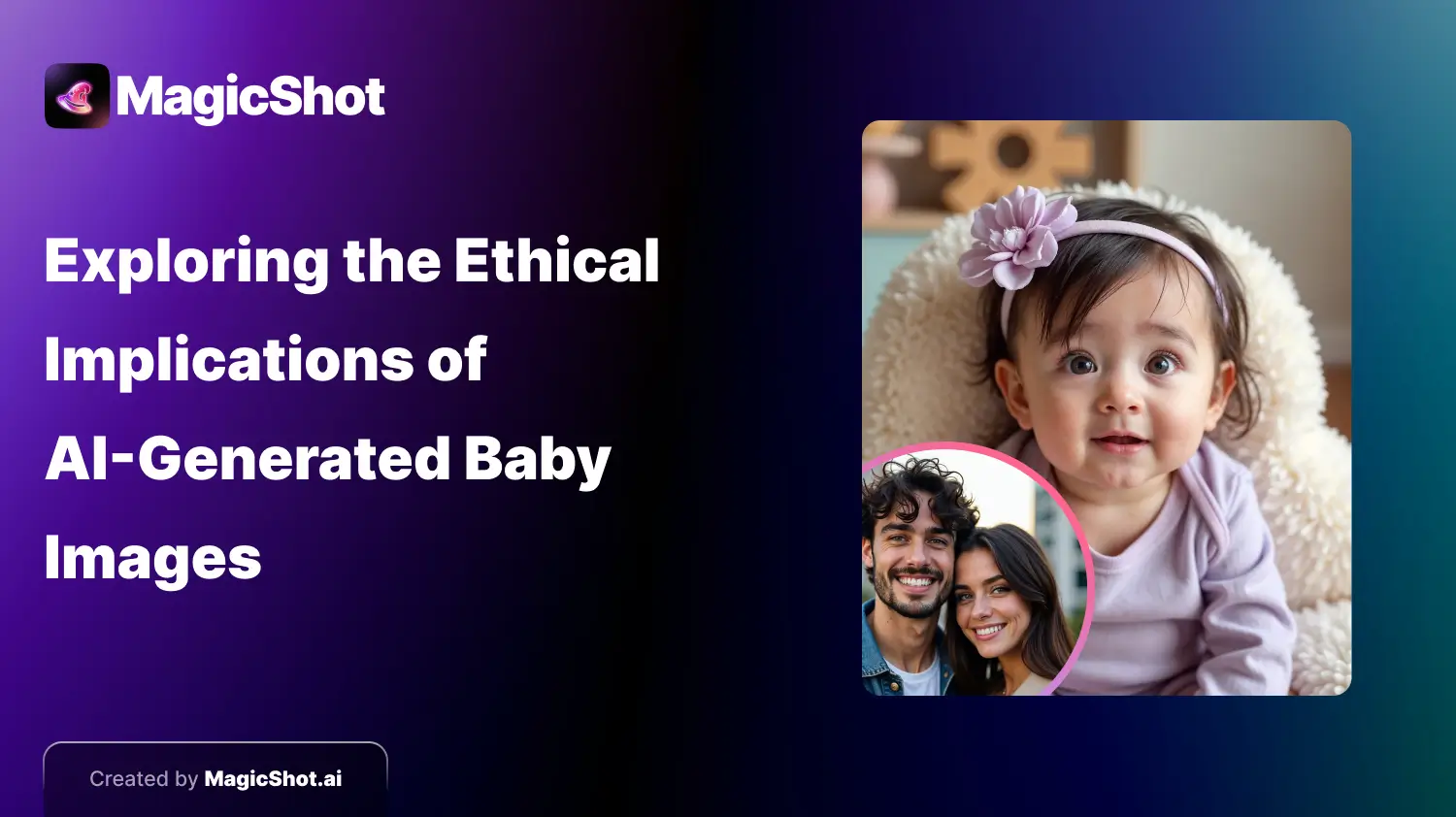
A synthetic baby photo is easy to make and easy to share, which is why it raises questions that a synthetic landscape does not. Nobody is harmed when a made-up mountain appears online. A made-up infant is different, because people attach strong feelings to babies, and because the line between a fictional child and a real one is easy to blur. This post looks at where the technology is used, where the concerns are real, and what responsible use looks like. If you want to see how it works first, the AI baby generator shows the kind of output we are talking about.
How these images are made
Early systems used generative adversarial networks, where one model produces images and another tries to spot fakes. Most current tools use diffusion models, which start from noise and refine it step by step toward an image that matches the prompt or reference photos. In both cases the model learns patterns from large collections of images and produces a new picture, not a copy of any one photo. Whether the training data was gathered with permission is a separate question, and a fair one to ask of any tool.
Where it is used without much controversy
Keepsakes and fun. Parents-to-be imagine what a future child might look like, much as people do with age filters. - Design and media. Illustrators and game artists need baby characters without photographing a real child. - Research and testing. Synthetic faces can stand in when real children's photos would raise consent problems, though results are only as good as the model.
The concerns that deserve attention
Passing off synthetic as real
The clearest problem is deception. A generated baby photo posted as a real child in an ad, a fundraiser or a social profile misleads people. Disclosure is the simple fix: say that the image is generated.
Use of a real child's likeness
A generated image of an imaginary baby is not the same as altering a photo of a real child. Uploading a real child's picture to a tool, and sharing the result, involves a person who cannot consent. Parents should think about what they are comfortable with, and about whether the image could be traced back to the child. Responsible tools and platforms restrict content involving minors, and users should respect those limits.
Sensitive moments
For people who are trying to conceive, dealing with infertility or grieving a loss, a realistic baby image can hurt as much as it delights. If you share a prediction image, consider who will see it.
Fake identities and misinformation
Realistic infant photos can be used in fake profiles, scams and false stories. This is a general risk of synthetic media, and it is one reason labelling and provenance tools are being developed.
Misuse and harmful content
Any tool that can generate realistic children carries a risk of abuse. This is why reputable services block sexual or exploitative content involving minors outright and why users should report anything that slips through.
What responsible use looks like
Label generated images as AI-made wherever they could be mistaken for real photos. - Do not use generated baby photos to sell, to raise money or to make claims about real people. - Do not upload other people's children without their parents' permission. - Pick tools that publish content rules and enforce them. - Keep such images out of contexts where they could cause pain, such as comment threads on fertility or loss.
What organisations should do
Companies that publish or host these images should state their rules, label synthetic content, and respond quickly to reports. Regulation on synthetic media is evolving in different regions, so businesses should check the rules where they operate instead of assuming one standard applies everywhere.
Bottom line
AI baby images are fine for harmless fun and for creative work when they are clearly labelled and never used to mislead or to involve a real child without permission. Most of the risk sits in how the images are shared, which makes disclosure and consent the two habits worth keeping.

Try Countless AI Image, Video, and Audio features on MagicShot.ai
Generate realistic photos of anything. Imagine, describe and create those images within seconds. Enhance your existing photos with our advanced AI engine.