AI art in 2027 is heading in two directions at once. Casual users want fast, personal edits of their own photos. Artists want more control and a less machine-made look. The eight trends below come from what was actually made and shared in 2026, with sources, and each is likely to carry into the new year.
Eight AI art trends for 2027
1. Personal photo edits stay on top
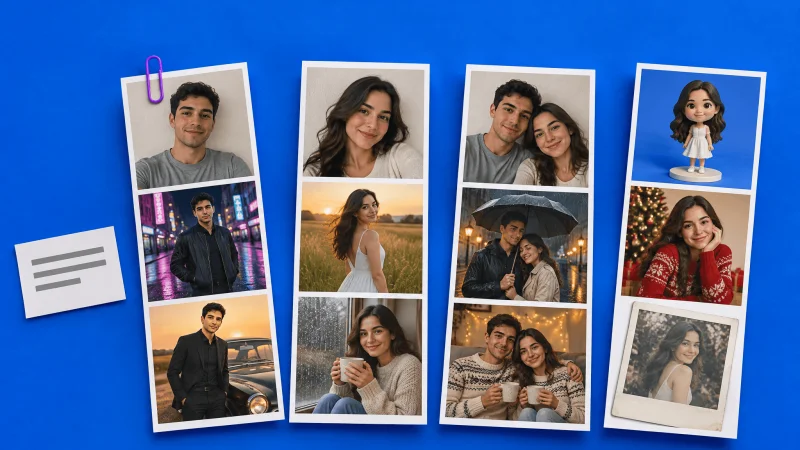
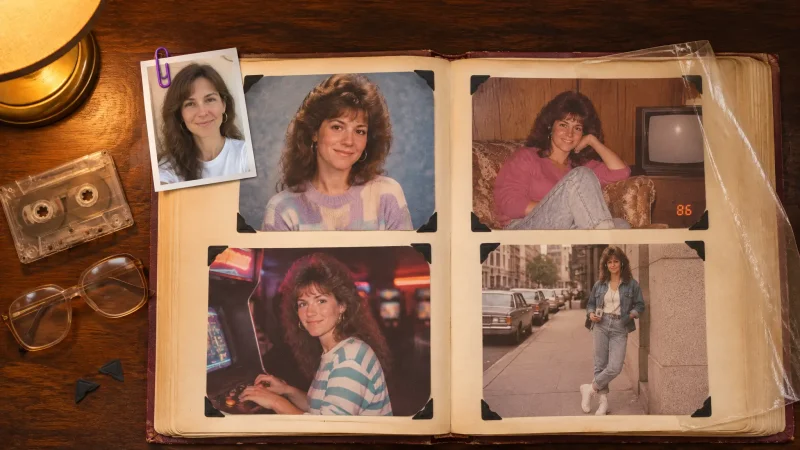
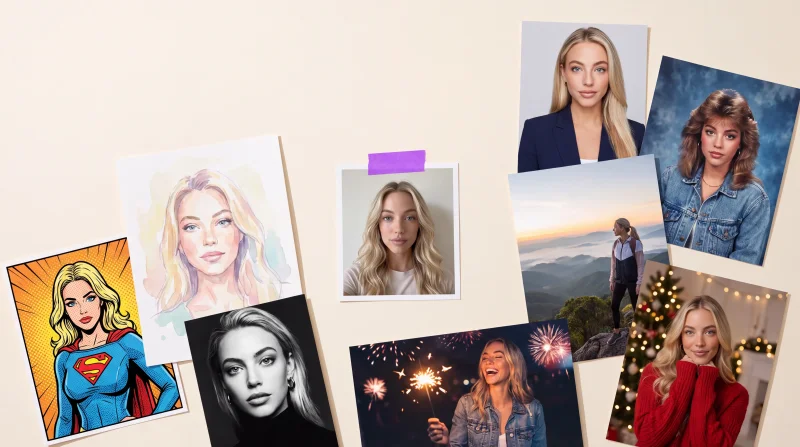
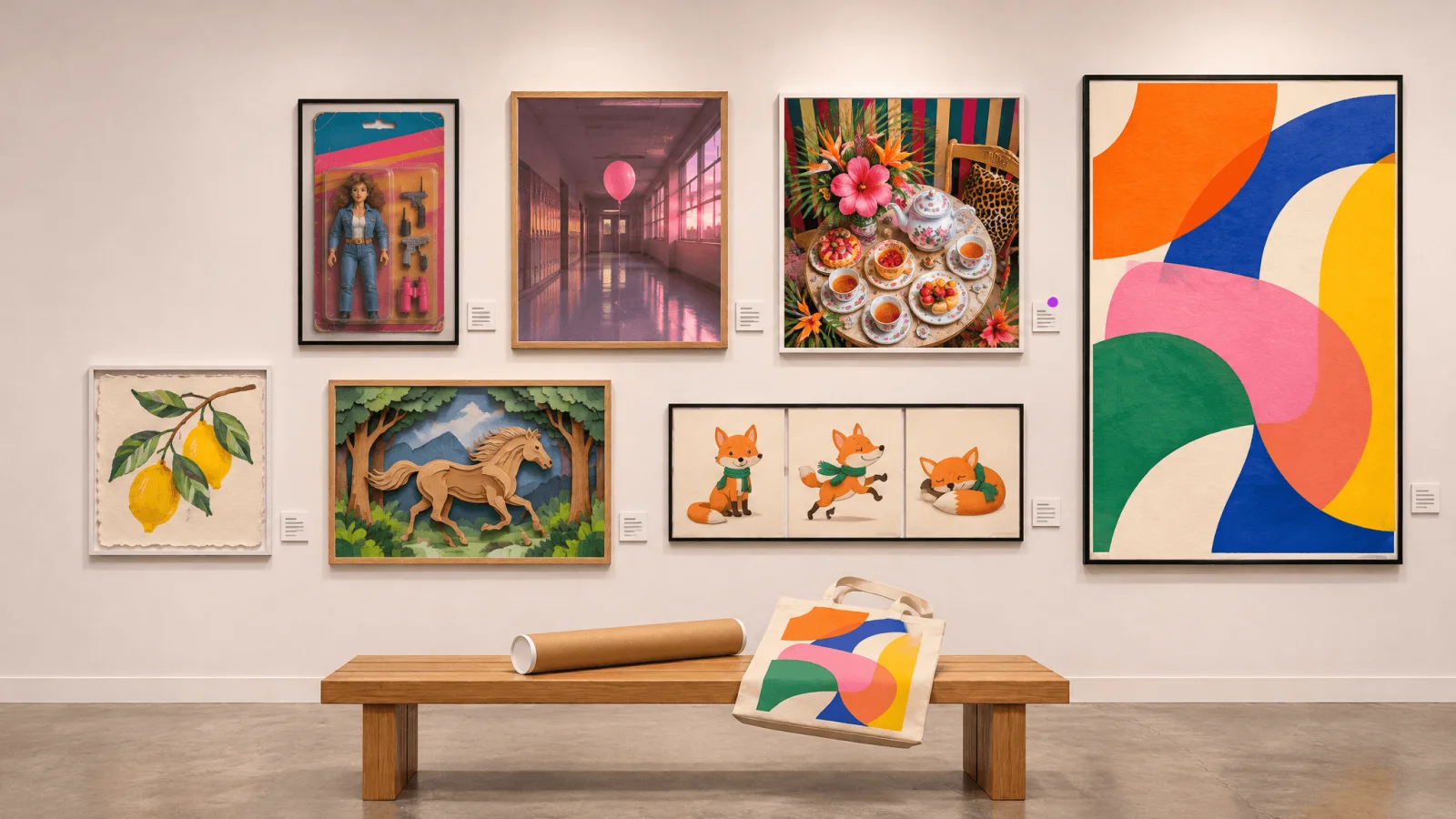
The most shared AI images of 2026 were not paintings. They were people's own photos turned into something else: a 1980s album print, a toy figure in a box, an anime avatar. These formats spread because anyone can join in with one selfie, and the result is about them. Expect the format to continue in 2027 with new decades and new costumes each few months.
Try it: start from our 1980s AI photo prompts or the wider list of 40 copy-paste photo prompts.
2. Dreamcore and soft surrealism
Unite.AI's trend forecast named dreamcore surrealism, which mixes nostalgic scenes with dreamlike imagery, as one of the leading AI art styles of 2026. It suits image models well: empty rooms, pastel skies and objects that are slightly wrong are things they produce easily. In 2027 the style moves from single images into short looping video.
Try it: "an empty school corridor at dusk, pink light through the windows, a single balloon floating at head height, soft film grain".
3. Maximalism returns
The same forecast points to a return of maximalism: dense pattern, strong colour, every corner of the frame filled. It is a reaction to years of minimal, clean design, and it is one area where generating is faster than drawing by hand.
Try it: "a tea table crowded with patterned china, tropical flowers, striped wallpaper, jewel colours, overhead view".
4. The handmade look
Creative Bloq's review of digital art trends reports digital artists going back to traditional media such as paint and clay, partly in response to the pressure AI has put on their work. AI users are following the look if not the method: visible brush strokes, paper grain, uneven ink. Polished, glossy output now reads as generated, and audiences scroll past it.
Try it: add "gouache on rough paper, visible brush marks, slightly uneven edges" to any prompt.
5. 2D paint on 3D forms
Creative Bloq also describes 2D artists applying their painting tools to 3D surfaces, so that animated scenes look like moving paper or paint. Image and video models are starting to imitate this hybrid, and it will be one of the more recognisable looks of 2027 in music videos and short films.
Try it: "a paper-cut horse running through a painted forest, layered cardboard depth, stop-motion feel".
6. Control beats one-click
Unite.AI notes rising demand for tools that give artists fine control over direction, so they can adjust output until it matches their intent. In practice that means keeping one character consistent across many images, editing a small region without regenerating everything, and picking the model that suits the style. Using several models from one place, as you can in an AI image generator with a style library, matters more than any single model.
7. From screen to wall
AI art is leaving the feed. Unite.AI points to work that combines generated images with physical art, and print-on-demand has made it cheap to turn a file into a poster, a shirt or a book cover. For 2027, plan images at print size from the start, and upscale before sending anything to a printer.
8. Consent and labels shape what gets shared
Adobe's June 2026 research found a strong majority of creative professionals believe AI should not train on artists' work without consent, with illustrators and artists the most concerned group. In the EU, transparency rules for realistic AI-generated images have applied since 2 August 2026. Artists who say plainly how a piece was made, and who avoid prompts built on a living artist's name, will have fewer problems with platforms and buyers.
What is fading
Three things that defined early AI art are losing ground. Hyper-smooth fantasy portraits now look dated. Prompts that copy a named living artist draw complaints and takedowns. And single hero images matter less than sets: a series of ten pictures in one consistent style gets more attention than one perfect frame.
How artists are responding
Creative Bloq is blunt that making a living as an artist got harder in 2025, with less freelance work available. The artists it describes are adapting by learning new tools and styles, and some are moving into game engines and 3D. On the AI side, the common thread in every forecast is a person staying in charge of the idea. For how the same shift looks in commercial work, see our piece on AI in graphic design.
How to use these trends
Pick one and make a series. Ten images in one style teach you more than ten styles once.
Write the texture into the prompt. Name the medium, the paper and the flaws.
Mix a trend with a personal subject. Your street in dreamcore style is more interesting than a generic corridor.
Say how it was made when you post or sell it.