

ChatGPT Ads has crossed a $1 billion annualized revenue run rate in less than 200 days since launch, and OpenAI is marking the milestone by opening self-service advertising to businesses in India, Europe, the Middle East and North Africa. The company confirmed the numbers in a blog post published Monday, calling it proof that its advertising business is scaling faster than almost any comparable product in tech history.
For an AI chatbot that only began testing ads in January 2026, the jump to a billion-dollar run rate is a significant data point, both for OpenAI's finances and for the wider question of how conversational AI platforms plan to make money.
ChatGPT Ads is still a young product by any measure. OpenAI first said it would test advertisements inside ChatGPT in January 2026, rolling ads out to logged-in users on the free tier and the lower-cost $8-a-month Go plan in the United States, while leaving paid Plus, Pro and Enterprise tiers ad-free. Eight months later, that experiment has scaled into a business generating a run rate that took Google's AdWords roughly four years to reach.
What Is Driving the ChatGPT Ads Run Rate
"In less than 200 days after launch, ChatGPT Ads has reached $1 billion in annualized revenue run rate," the company wrote in a blog posted on Monday, adding that the platform is now used by tens of thousands of advertisers and continues expanding globally. That pace stands out even against the biggest names in digital advertising. One industry analysis noted that Google's AdWords needed four years to reach the same $1 billion mark, while OpenAI's ad business got there in roughly six months.
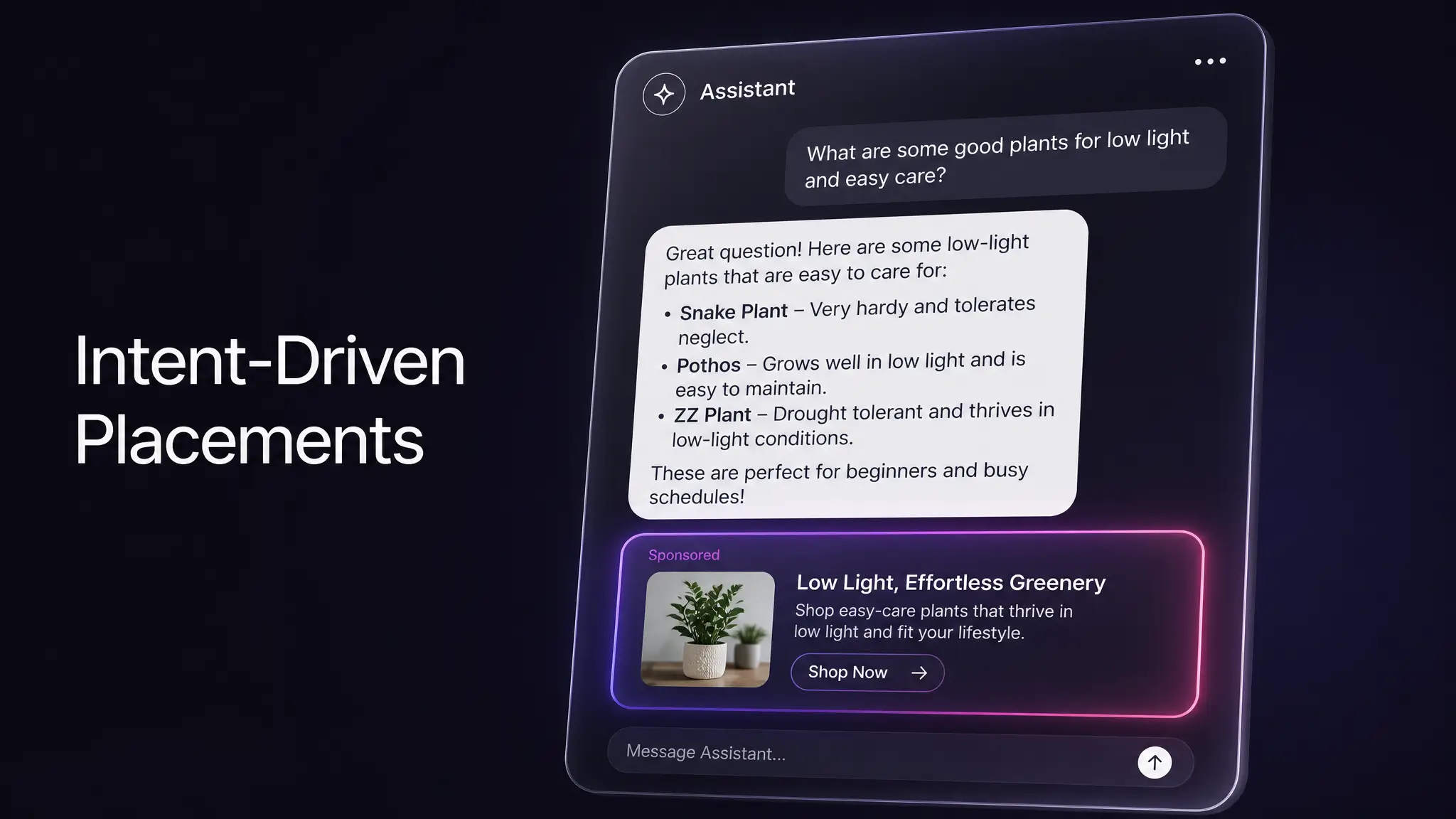
OpenAI frames the opportunity around timing rather than reach alone. According to OpenAI, people arrive at ChatGPT already partway through a decision, comparing market options or planning something like a renovation. Others are researching a job change or weighing a purchase, and OpenAI wants its ad product positioned inside that moment, feeding suggestions into an existing conversation instead of a separate results page. That is a different pitch than a traditional search results page lined with sponsored links: the ad sits inside the answer the user is already reading.
Self-Serve ChatGPT Ads Expand to India, Europe and MENA
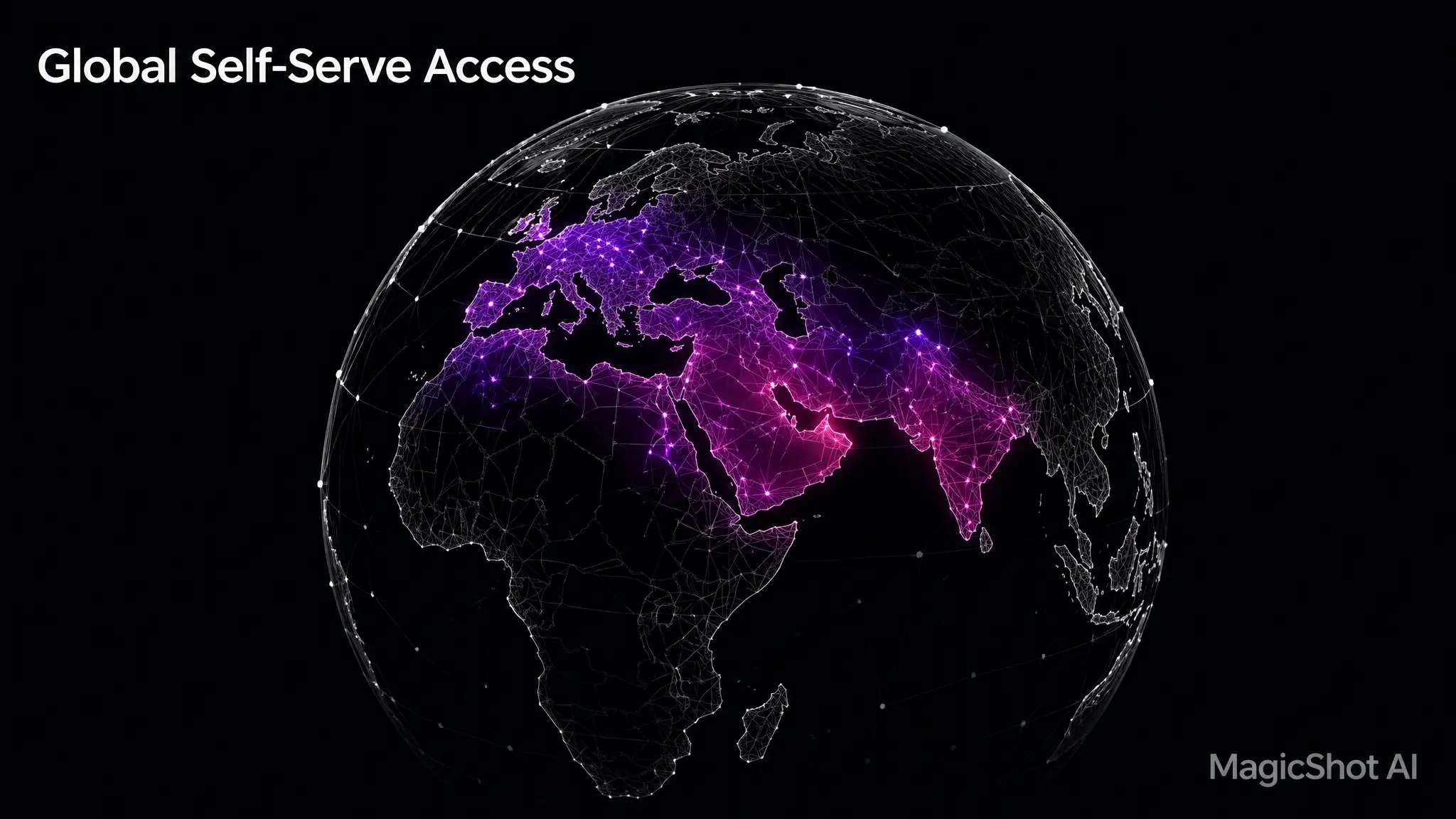
The revenue milestone arrived alongside a geographic expansion. Starting August 31, advertisers in India, Europe, the Middle East and North Africa gained the ability to buy ChatGPT advertising directly through Ads Manager, a self-service tool that had previously only been available to advertisers in the United States. Businesses in those newly added regions can now open an account and launch campaigns without first going through OpenAI's managed-sales team.
ChatGPT Ads started under a managed-sales, agency, and partner-led model, and the product is now available in more than 40 countries through OpenAI's Ads Solutions team and its agency and technology partners, with an ecosystem that has grown to more than 50 technology and measurement partners. Ads Manager, which was introduced in May, opened the platform to small and medium-sized businesses without a managed contract, and OpenAI says SMBs account for a material share of total ad revenue. That detail matters: it suggests the growth isn't just coming from large brands with dedicated agency relationships, but from smaller sellers running campaigns themselves.
By early September, OpenAI's own help center listed more than 50 countries where self-service access is available, a sign that the rollout has continued to widen in the days since the initial announcement.
The expansion also reflects where OpenAI's user growth has been happening. Advertisers based outside the United States already represent a growing share of the company's client base, and giving marketers in India, across the EU, and throughout the Gulf direct access to Ads Manager removes a layer of friction that previously required going through a managed-sales relationship. For a small e-commerce brand in Mumbai or a hospitality company in Dubai, that is the difference between waiting on an account manager and running a test campaign the same afternoon.
How ChatGPT Ads Work, and What OpenAI Says About Trust
OpenAI has been careful to frame the ad product as separate from the chatbot's actual answers. Ads are visually distinguished from the conversation and carry a label marking them as advertising, and the company maintains they do not influence the responses ChatGPT generates. "Advertisers do not receive access to people's private conversations, and users can control how their ad experience is personalized," the company wrote.
Targeting can pull from more than just the current exchange. Depending on the country and a user's settings, the system can draw on a person's wider use of ChatGPT, extending beyond the active conversation to interests the user has agreed to share more broadly. Personalization is on by default with an option to opt out, ads are separated from chat responses and labeled as sponsored, and OpenAI says conversation data is not sold to advertisers. The company has also said it will not show ads to users under 18 and will avoid placing ads against sensitive topics such as health and politics.
The company has leaned on that separation between ads and answers as its main trust argument, arguing that a labeled, opt-out-able ad unit is a fundamentally different experience than search advertising blended into results. Whether users read it that way in practice, especially given how much personal and professional context people share in a chat window, remains one of the more contested parts of the rollout.
Why the Ad Push Matters for OpenAI's Bigger Bet
On the technical side, OpenAI has built the ad-buying process to resemble tools marketers already know. Advertisers can run campaigns from a product feed using a schema similar to Google Merchant Center, which is part of why e-commerce sellers with existing product catalogs have been able to plug into ChatGPT Ads relatively quickly rather than building creative from a blank slate. Paid placements, organic carousels, and in-answer citations remain distinct levers inside the product, giving brands more than one way to show up in a given conversation.
Advertising is not a side project for OpenAI, it is part of a broader effort to diversify revenue as the company's costs climb. OpenAI has committed to spending roughly $1.4 trillion on data centers and chips through the rest of the decade, and the company does not expect to turn a profit for years. Reports have suggested OpenAI could burn through as much as $115 billion in cash by 2030. Against that backdrop, an ad business that reached $1 billion in run rate within 200 days looks less like an experiment and more like a necessity.
It also marks a reversal for the company's leadership. CEO Sam Altman had previously described advertising as a "last resort," worried that showing ads might erode trust in a product where people share sensitive personal and professional information. That reluctance gave way once the scale of AI infrastructure spending became clear, and OpenAI is now pursuing a business model that looks more like the one built by Google and Meta, both of which turned free-to-use products into advertising empires. The shift also comes as OpenAI reportedly weighs a future initial public offering, where a diversified revenue base beyond subscriptions would likely be viewed favorably by investors.
Skepticism From Agencies and Analysts
Not everyone is convinced the milestone tells the full story. Several days before OpenAI's announcement, agencies had taken to LinkedIn to discuss that they were not seeing performance from ChatGPT Ads, a reminder that a fast revenue ramp and consistent campaign performance are not the same thing.
The bigger question is whether the current pace is sustainable against OpenAI's own long-term ambitions. Scaling from a $1 billion foothold today to a $100 billion goal by 2030 requires expanding the business by a factor of 100, which means the ad division would need to maintain a compound annual growth rate of nearly 216% from this point forward, crossing roughly $3.16 billion in 2027, $10 billion in 2028, and $31.6 billion in 2029 before the final leap to $100 billion. One financial newsletter put the current figure in perspective bluntly, noting that a billion-dollar run rate from a 200-day-old ad product is a genuinely fast ramp, but still only a small fraction of the revenue base needed to cover OpenAI's compute commitments.
That kind of pushback isn't unusual for a brand-new ad channel still working out attribution and measurement, but it does complicate the celebratory framing of a $1 billion run rate. Annualized figures are, by definition, a projection: they take a recent period of revenue and multiply it out over a full year, which can make a short, strong stretch of growth look bigger than the trend that follows it. Investors and agencies watching OpenAI's actual booked revenue in future disclosures will have a clearer read on whether the current pace holds, accelerates, or cools once the novelty of a new placement wears off.
What the ChatGPT Ads Expansion Means for Marketers and Content Creators
Every new ad surface creates new demand for creative to fill it, and ChatGPT's ad format is unusual enough that recycled banner assets and generic stock photography won't carry a campaign the way they might on a traditional search results page. Ads inside a conversational answer need to feel specific to the moment a shopper, renter, or job-seeker is actually in, which puts pressure on brands and small sellers alike to produce more variations of product shots, lifestyle images, and short-form video, faster than a traditional creative pipeline allows.
That pressure is exactly where AI creative tools have found their footing over the past two years. A seller expanding into a new ChatGPT Ads market doesn't have time to book a studio for every listing photo; tools like a product photo generator can turn a single product shot into a full set of catalog-ready images for testing across regions. Brands leaning into the kind of short, native-feeling video that performs well in feeds are increasingly using UGC video tools to produce testimonial-style clips without booking a creator for every market, and some are turning to AI avatar video to localize a spokesperson message across languages without reshooting from scratch. For teams that need to adapt one core video concept into the dozens of small variations a self-serve ad platform rewards, a text to video tool can shortcut a lot of that production work.
None of that changes the underlying advertising economics OpenAI is trying to prove out. But as self-serve access spreads to more countries and more advertisers run more campaigns, the practical bottleneck for a lot of small and mid-sized sellers won't be the ad platform itself, it will be having enough decent creative to keep the campaigns fresh.
The Bottom Line
ChatGPT Ads went from a January 2026 test on free and Go-tier accounts in the US to a $1 billion annualized run rate and self-service access in more than 50 countries within about eight months. OpenAI is treating that as validation of a conversational ad format built around intent rather than keywords. Agencies and analysts are treating it more cautiously, pointing out that early performance complaints and the enormous growth rate required to hit OpenAI's stated 2030 ambitions are real open questions. Both things can be true at once, and the next few quarters of disclosed, rather than annualized, ad revenue will say a lot more than this first milestone does.