
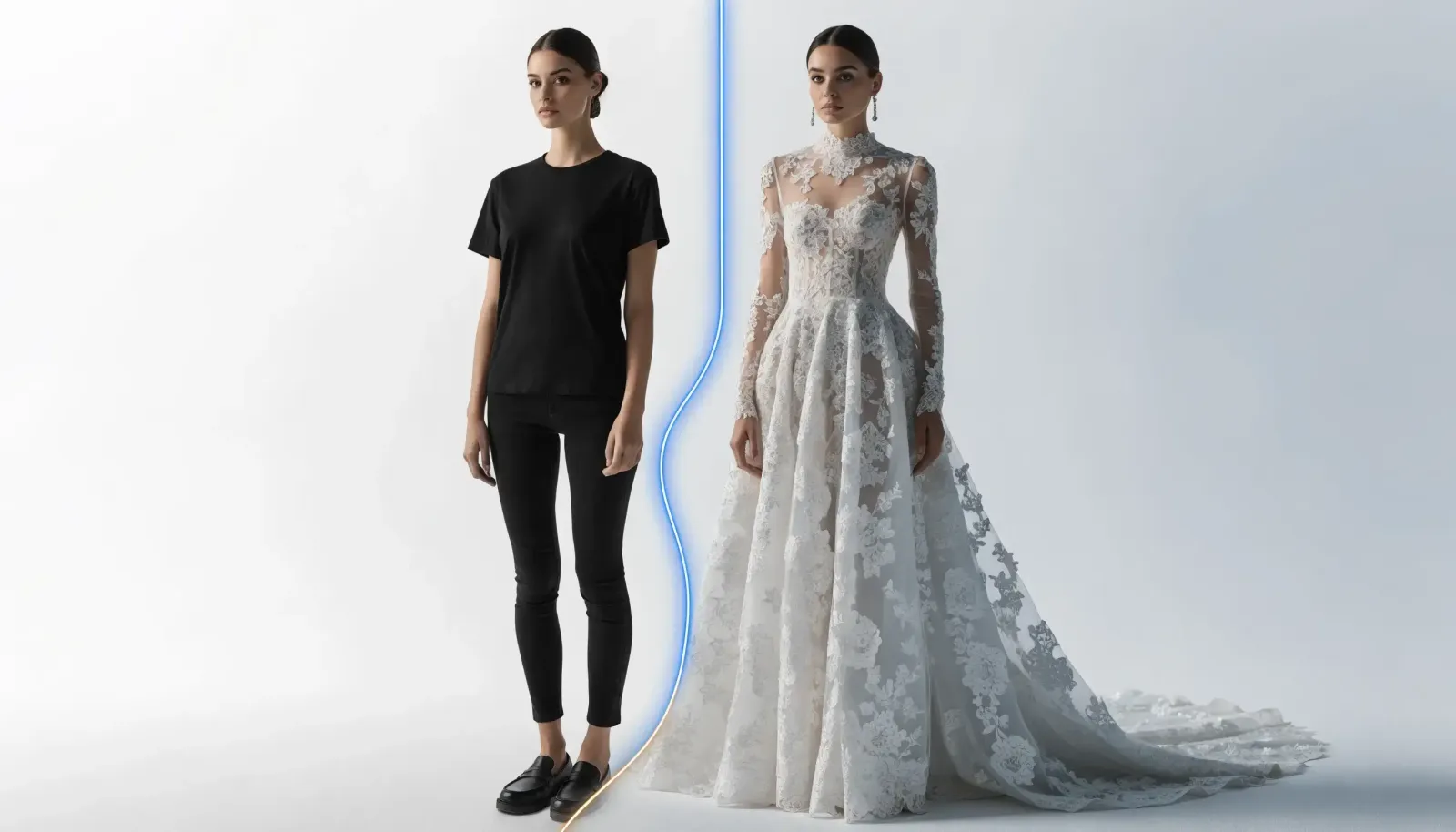
Picture this: it is 11pm, you have 14 browser tabs open, and you still cannot tell whether that A-line gown will flatter you or swallow you whole. This is exactly where virtual try-on changes the game. Instead of guessing from a model who looks nothing like you, you upload a photo and see the dress on your body, your skin tone, your posture. For anyone planning a wedding, this is the difference between hopeful scrolling and confident decisions.
Below, I will walk through how dress change AI actually works, how to try on wedding dresses at home without booking a single appointment, and how to use these tools to genuinely narrow down your choices. No fluff, just the workflow I would give a friend who asked me where to start.
What is virtual try-on, and how does dress change AI work?
Virtual try-on is technology that digitally places a garment onto a photo of you, so you can preview how clothing looks on your own body before buying or visiting a store. Modern versions rely on dress change AI: a model trained on millions of clothing and body images that maps a target outfit onto your photo while keeping your face, pose, and proportions intact.
The mechanics are simpler than they sound. You provide two inputs, a clear photo of yourself and the garment you want to test, and the AI handles the draping, shadows, and fit so the result looks believable rather than pasted on. Good systems respect how fabric falls at the shoulders, cinches at the waist, and pools at the hem. That realism is what makes a try it on preview useful instead of gimmicky.
The practical upside is speed. A traditional bridal appointment might let you try five or six gowns in two hours. With a try on dress tool, you can compare twenty silhouettes before lunch, save the winners, and walk into a boutique already knowing what suits you.
Why brides are turning to virtual try-on first
Wedding dress shopping is emotionally loaded and logistically exhausting. Sample sizes rarely match real bodies, alterations cost a fortune, and the pressure of a sales floor can push you toward a "yes" you later regret. Trying on dresses digitally removes that pressure entirely. You experiment privately, at your own pace, and only commit when something genuinely clicks.
There is also a representation problem worth naming. Bridal sample racks tend to skew toward one body type and one height, which means many brides spend appointments mentally translating how a clamped, pinned sample might look on them once it actually fits. A try on dress preview removes that guesswork by starting from your real photo, so the silhouette you see is already adjusted to your frame rather than to a mannequin. For curvy, petite, tall, or plus-size brides, that shift alone can make shopping feel far less discouraging.
How to try on wedding dresses at home
You do not need a studio or special equipment to try on wedding dresses at home. You need decent light, a plain background, and a few minutes. Here is the process I recommend:
Take a clean reference photo. Stand against a neutral wall, face the camera, and let your arms fall naturally at your sides. Even, soft light beats harsh shadows every time.
Choose your candidate gowns. Pull images of the dresses you are curious about, ball gown, mermaid, sheath, empire waist, so you can test contrasting silhouettes side by side.
Run the try-on. Upload your photo and the dress, then let the dress change AI generate the preview. Tools like the MagicShot Fashion Try-On are built for exactly this kind of outfit swapping.
Compare and save. Keep a shortlist folder. Seeing all your results together makes patterns obvious, maybe every gown you love has a sweetheart neckline you did not consciously notice.
Test the details. Try the same silhouette in different fabrics or with a veil to understand how small changes shift the whole look.
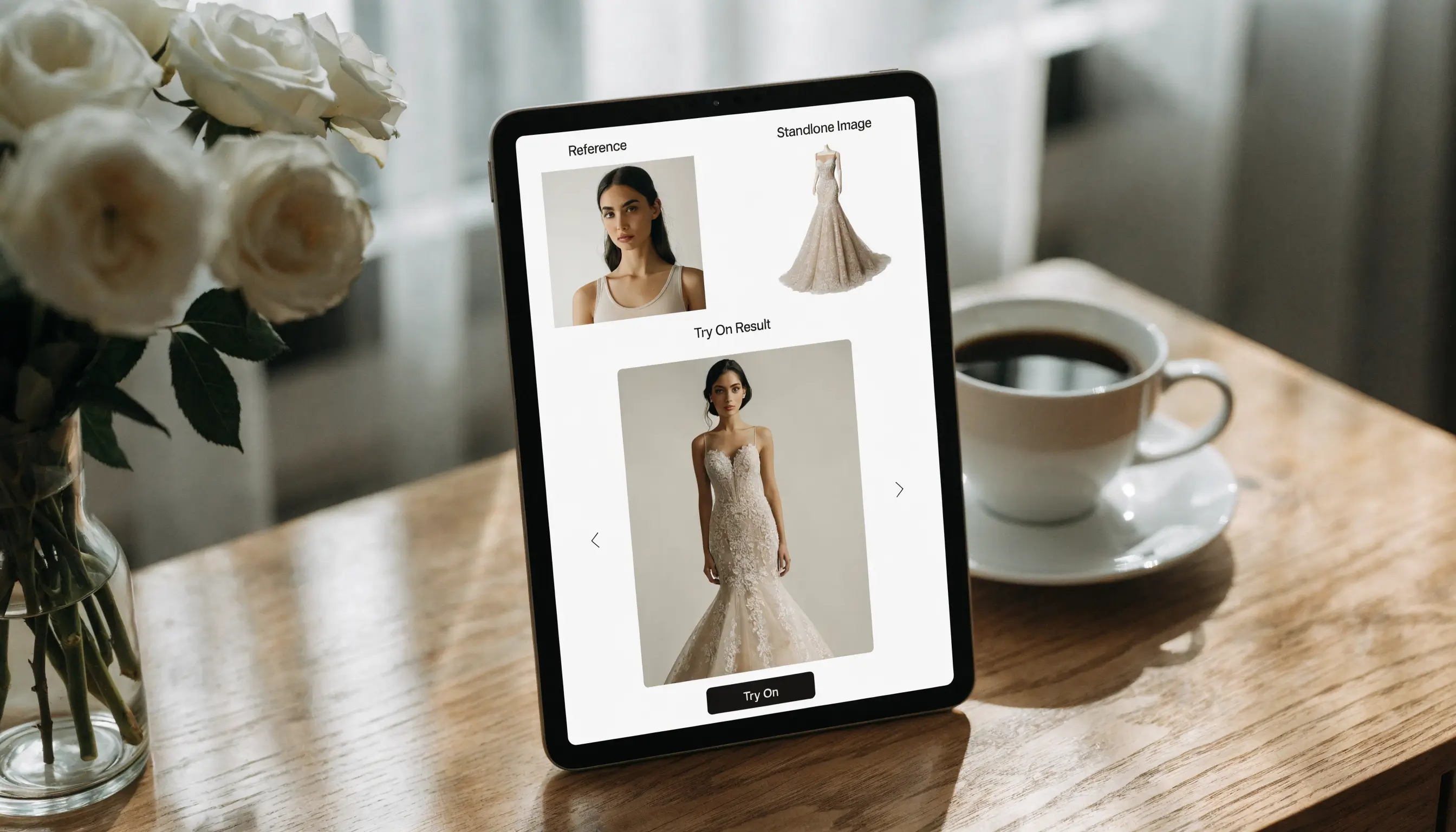
The goal of trying on wedding dresses at home is not to replace the moment you zip into the real gown. It is to make that moment count by walking in with a clear, informed shortlist instead of a vague Pinterest board.
Try before you buy: why previewing beats guessing
The phrase try before you buy gets thrown around loosely, but for wedding wear it carries real financial weight. Gowns are expensive, often non-returnable, and frequently require months of lead time. A misjudged online order can cost you both the dress and the deposit.
A virtual try on preview de-risks that decision. When you can see a gown on your frame before committing, you catch the deal-breakers early, the neckline that does not suit you, the volume that overwhelms your height, the color that fights your complexion. You spend money on the dress you were always going to love, not on a learning experience.
Trying on digitally first means your in-person appointments become confirmations, not gambles.
Beyond weddings: everyday fashion try-on
The same approach powers everyday Fashion Try-On. Testing a blazer for an interview, a swimsuit for vacation, or a bold color you have never dared wear, dress change AI lets you audition any look without committing a cent to clothes you have not seen on yourself. Once you get comfortable trying things on virtually for a wedding, you will reach for it for ordinary shopping too.
How to choose a wedding dress using virtual try-on
Knowing how to choose a wedding dress is less about chasing trends and more about understanding what works for you. Virtual try-on accelerates that self-knowledge. Here is a framework that pairs well with digital previews:
1. Start with silhouette, not embellishment
Silhouette is the foundation; everything else is decoration. Use try-on to test the big four, ball gown, A-line, mermaid, and sheath, against your body before you get distracted by lace and beading. The shape that makes you stand taller in the preview is your answer.
2. Match the dress to the venue and season
A cathedral train is stunning indoors and miserable on a beach. Preview your shortlist with your actual setting in mind: lightweight fabrics for summer gardens, structured gowns for ballrooms. Trying it on digitally helps you imagine the dress in context, not in a vacuum.
3. Consider movement and comfort
You will wear this dress for 12 hours, dancing, hugging, sitting through dinner. While a static preview cannot test mobility, it can flag silhouettes that look restrictive or fussy, so you prioritize comfort when you try the real thing.
4. Trust your shortlist, then book appointments
Once virtual try-on narrows your options to two or three favorites, book fittings for those specifically. You save hours, reduce decision fatigue, and arrive knowing what you want. That clarity is the entire point.
Tips for the most realistic try-on results
A few habits dramatically improve what the AI gives back:
Use a front-facing, full-length photo. The more of your body the AI can see, the more accurately it drapes the gown.
Avoid busy backgrounds. A plain wall helps the model isolate your figure cleanly.
Wear fitted clothing in your reference shot. Bulky layers confuse the fit estimation.
Test multiple angles. A dress that wins from the front sometimes loses from the side, preview both if you can.
Keep your lighting neutral. Warm or colored light can skew how a gown's true color reads.
These small adjustments turn a rough approximation into a preview you can actually make decisions from.
What virtual try-on can and cannot do
Honesty matters here, so let me set expectations. Virtual try-on is excellent at answering the visual questions that derail most shoppers: Does this shape suit me? Is this neckline right for my proportions? Does this color work with my skin tone? Those are the questions that cause the most regret when answered wrong, and they are exactly what dress change AI handles well.
What it cannot do is replace a tailor's measuring tape. A preview will not tell you whether a gown needs a half-inch taken in at the bust or how a bustle will behave when you sit. Think of it as the research phase, not the final fitting. The smartest brides use both: virtual try-on to decide what to pursue, and a real appointment to nail the fit of the gown they have already fallen for. Used that way, the technology saves time and money without overpromising.
A quick real-world workflow
Here is how this plays out in practice. A bride bookmarks 30 gowns from various designers, runs each through a virtual try on, and discovers that fit-and-flare shapes consistently look best on her while the dramatic ball gowns she assumed she wanted wash her out. She walks into one boutique, tries three fit-and-flare gowns, and says yes in 40 minutes, a process that often stretches across multiple weekends and several stores. That is the quiet power of trying it on digitally first.
The bottom line on virtual try-on
Wedding dress shopping used to mean blind appointments, sample-size frustration, and expensive guesswork. Virtual try-on flips that script. By letting you try it on from your own photo, dress change AI hands you a private, repeatable fitting room where you can compare silhouettes, test colors, and build a confident shortlist before anyone hands you a price tag. Whether you are auditioning gowns or just curious how a new style looks on you, starting digitally means every later choice is sharper, faster, and far less stressful.
Ready to see your dress on you? Try the MagicShot Fashion Try-On and turn your shortlist into a sure thing.