
Image to video AI takes a still photo you already have and turns it into a short moving clip. No camera crew, no reshoot, no timeline scrubbing in an editor. You upload a picture, describe the motion you want, and the model animates it. That's the whole promise, and it's why the search for a good image to video generator has exploded across Canva, CapCut, Grok, Gemini, Sora, Veo 3, Filmora, and Kling AI at once.
The problem is that "which one is actually worth using" gets buried under a hundred near-identical "is it free" comparisons. This guide answers the definitional question first, lays every major tool side by side in one table, and shows you where the free tiers quietly stop being useful.
What image to video AI is and how it works
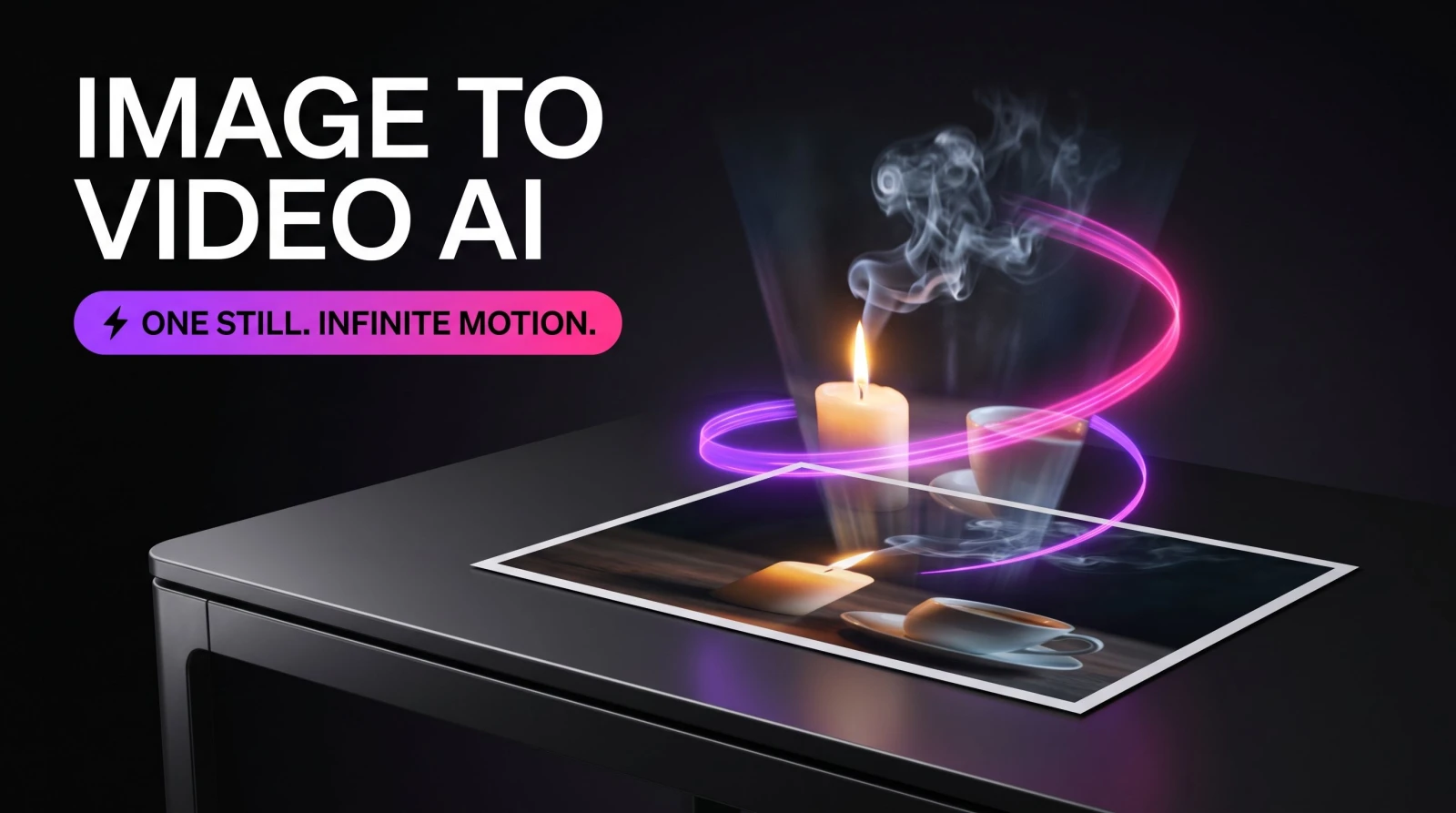
Image to video AI is a generative model that reads a single input image and predicts the next frames, producing a short video where the subject, camera, or background moves. You feed it one still. It gives you motion.
Under the hood, most of these tools are diffusion or transformer video models trained on huge amounts of footage. They learn how things move, how light shifts, how a camera pushes in. When you hand over a photo, the model treats it as the first frame and generates a sequence that stays visually consistent with it. Here's the short version of the workflow you'll see on almost every platform:
Upload your image. A product shot, a portrait, a landscape, a piece of AI art. Higher resolution in means cleaner motion out.
Describe the motion (or pick a preset). "Slow zoom in," "hair moving in the wind," "camera orbits left." Some tools only offer canned effects. Better ones take a text prompt.
Generate and review. The model renders a clip, usually 4 to 10 seconds. You regenerate if the motion drifts or the face warps.
The catch across all of them: quality, clip length, and how many renders you get before a paywall vary wildly. That's the part the "is it free" questions never quite answer, so let's put the tools next to each other.
Best image to video AI free tools compared
Here's the honest state of the major players. "Free tier" means whether there's a no-cost way in at all, not whether it stays useful. Most cap you fast.
Canva: Has AI video generation inside its Magic Studio suite, but the good image-to-video models sit behind Canva Pro or run on limited monthly credits. Fine for social snippets, not for volume.
CapCut: AI motion effects live in the editor and mobile app. Basic effects are accessible, but the stronger AI generation features push you toward CapCut Pro, and exports can carry limits.
Grok (xAI): Grok's image and video features are tied to an X Premium or SuperGrok plan. It is not an open, unlimited free tool, despite how often that's asked.
Gemini / Google: Google's video generation runs on the Veo family and is surfaced through Gemini and Google tools on paid plans and regional rollouts. Access and limits change often.
Sora (OpenAI): Strong at coherent, longer motion. Access is tied to ChatGPT paid plans with usage caps, and availability has varied by region.
Veo 3 (Google DeepMind): One of the highest-quality options, notable for native audio. It's a premium model, metered by credits or plan tier, not a casual free tool.
Filmora: Desktop and mobile editor with AI image-to-video features. Watermarks and export restrictions apply until you buy a license.
Kling AI: Popular for realistic human motion and physics. Offers daily free credits that refresh, then meters you into paid tiers for longer or higher-res clips.
Midjourney / Stable Diffusion (ComfyUI): Midjourney added video, but it needs a subscription. Stable Video Diffusion through ComfyUI can run locally at no per-clip cost, but you're managing your own hardware, models, and node graphs. That's a project, not a two-minute task.
How to read a "free" claim on any of these
When a tool says "free," check three things before you trust it. How many renders per day or per month? What resolution and clip length does the free tier allow? Is there a watermark on the export? A tool can be technically free and still useless for a client post if it stamps a logo across your 480p clip and cuts you off after two generations.
Kling's daily-refresh credits, for example, are genuinely handy for experimenting, while a lot of editor-based tools reserve their best image-to-video models for the paid tier and only expose canned motion presets for no cost. Read the limit, not the headline.
What the table really tells you
Two patterns repeat. First, "free" almost always means a trial-sized credit bucket that empties in an afternoon. Second, each tool locks you into its model. Kling is great at people, Veo 3 is great at audio-synced motion, Sora holds longer shots together. Picking one means giving up the others.
Where the free image to video tiers break down
The free-tier hunt feels productive until you actually try to finish a project. Three walls show up fast:
Credit caps that empty in an afternoon
Most free tiers hand you a small stack of credits or a few renders a day. Image to video eats them quickly because you rarely nail the motion on the first try. Three regenerations of one clip and you're done for the day on some platforms.
One-model lock-in
Sign up for Kling and you get Kling. Sign up for Sora and you get Sora. But a product ad, a talking avatar, and a slow cinematic portrait each want a different model. Chasing the best image to video ai free option per job means five logins, five billing pages, and five sets of credits to track.
The quality ceiling
Free tiers frequently cap resolution, add watermarks, or restrict clip length to a few seconds. The output that looks fine in a demo often can't carry a real post. You either accept the watermark or upgrade, which was the point of the free tier all along.
Where MagicShot fits
MagicShot does the same job without the per-tool scavenger hunt. Our image to video tool lives inside one subscription that includes 500+ models, so you're not choosing between Kling for people and something else for products. You animate the photo, pick the look, and move on.
Because it's one account, the rest of the pipeline is already there. Generate the still first with the product photo generator, or start from a script instead of a picture with text to video. Same login, same credits, no hopping between five apps to finish one clip.
For sellers and creators this is the practical win. A product photo becomes a scroll-stopping clip for Reels or TikTok. A headshot becomes a subtle-motion intro. A piece of AI art becomes a looping wallpaper. You're not comparing free tiers one by one anymore. You're just making the thing.
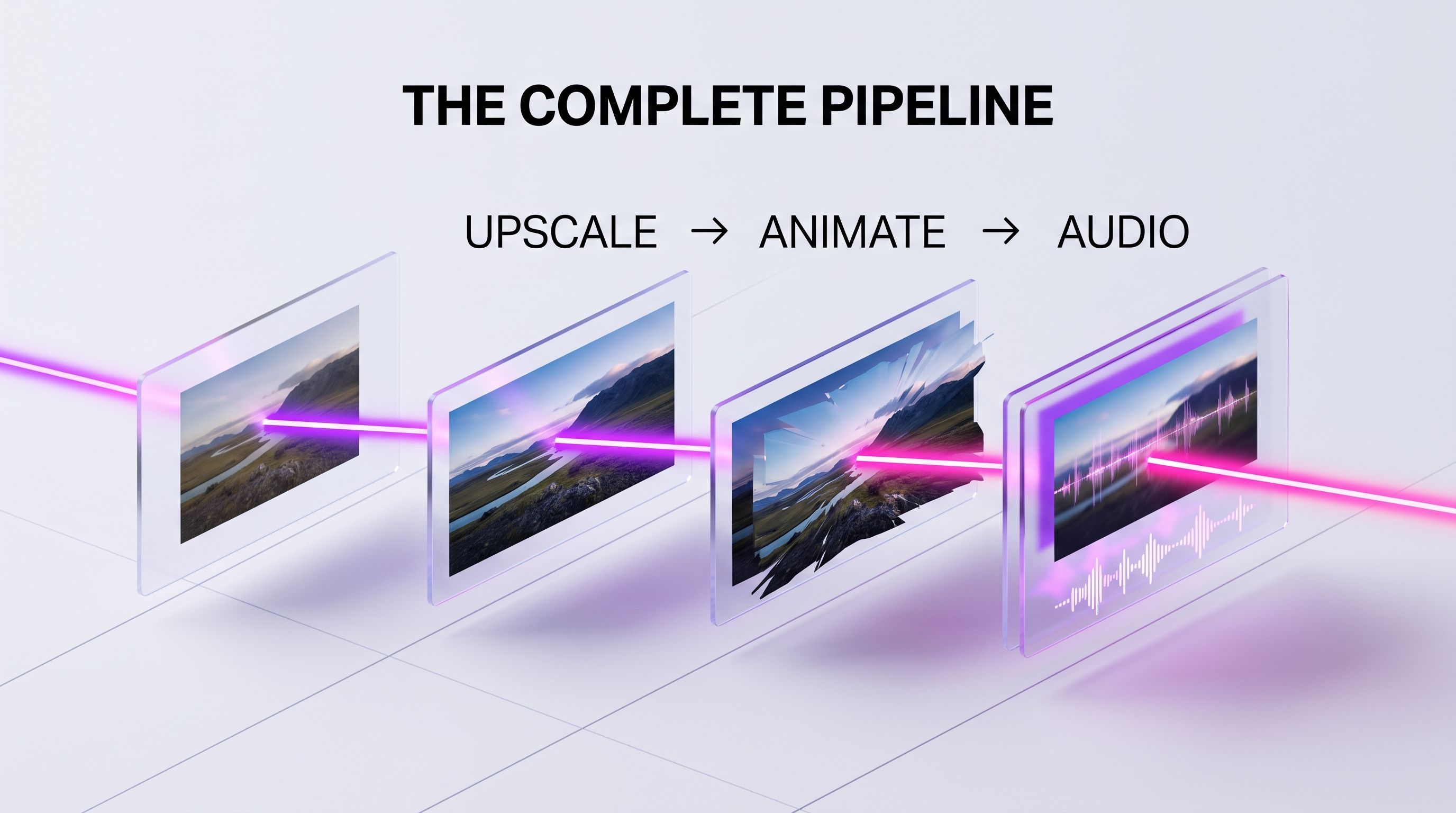
A real workflow, start to finish
Say you sell handmade candles and you want a 6-second clip for Instagram. Here's how it goes without app-hopping:
Shoot or generate the still. Snap the candle on your phone, then strip the messy kitchen behind it with the background remover. If you don't have a good photo at all, generate one first.
Sharpen it. Run a low-res phone shot through the image upscaler so the motion has crisp detail to work with. Blurry input makes for mushy video.
Animate it. Feed the clean still into image to video, prompt a slow push-in with a flickering flame, and generate. Regenerate once or twice until the flame reads natural.
Add sound. Layer a voiceover or drop in a background track, then post to Reels or TikTok.
Four steps, one login. Compare that to a background remover in one app, an upscaler in another, and an image-to-video tool that's out of free credits by the time you get there.
How to pick the right image to video generator
Skip the endless free-tier comparison and match the tool to the job instead:
Realistic human motion: models tuned for people and physics handle faces and body movement without warping.
Audio-synced or longer cinematic shots: premium models like Veo 3 and Sora hold coherence over more seconds.
Volume and variety: a multi-model subscription beats single-tool credits when you produce clips weekly, not once.
Total control, zero cost per clip: local Stable Video Diffusion in ComfyUI, if you have the hardware and patience.
If you produce content regularly, the math favors one subscription with multiple models instead of managing several competitors’ limited free tiers.
The short version
Image to video AI is now good enough for real work: product clips, social posts, animated portraits, looping backgrounds. The free tiers are real but small, and each one traps you in a single model with credit caps and a quality ceiling. If you only need one clip, grab a free trial and accept the limits. If you need clips regularly, one subscription that covers the models you'd otherwise hunt for individually saves the hours you'd lose logging in and out of five different tools.