
What Is Seedance 2.0?
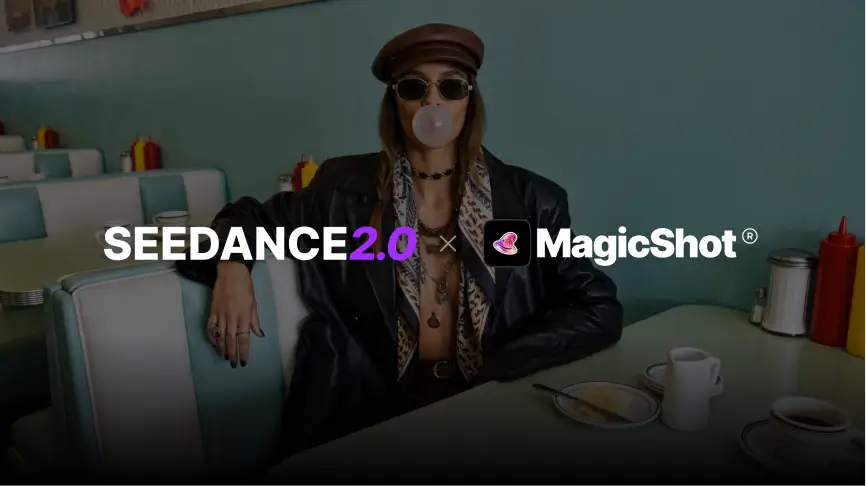
Seedance 2.0 is ByteDance’s newer generative AI video model built for text-to-video and image-to-video creation. The core pitch is not just generating motion from prompts, but doing it with better visual stability across frames, stronger scene coherence, and more controlled creative direction.
What makes this important is that video generation is much harder than single-image generation. A model has to maintain object proportions, lighting, perspective, motion flow, and believable camera behavior across multiple frames. Seedance 2.0 is being positioned as stronger on exactly those issues, which is why it has drawn attention so quickly.
How Seedance 2.0 Improves on the Previous Version
The most noticeable shift in Seedance 2.0 is that it appears to improve the quality of movement, not just the quality of frames. The references repeatedly point to stronger temporal consistency, smoother transitions, more natural animation, and more cinematic camera simulation. That means the model is being discussed less as a novelty generator and more as a tool for clips that need structure and continuity.
Another notable improvement is prompt reliability. Seedance 2.0 handles more complex prompts with multiple characters, scene details, and motion instructions more accurately than earlier versions. That matters because creators care less about one perfect demo and more about getting usable results with fewer reruns.
Key Features of Seedance 2.0
Text-to-video and image-to-video generation
Seedance 2.0 supports both text-to-video and image-to-video workflows, making it useful for users starting from either an idea or a visual reference. This makes it relevant for both exploratory generation and more controlled brand or design work.
Better temporal consistency
One of the clearest improvements mentioned in your references is stronger temporal consistency. In practical terms, that means objects, characters, and visual details are more likely to stay stable across frames instead of drifting or distorting.
More natural motion
The newer version is described as having smoother transitions and more realistic subject animation, especially in dynamic scenes. This is one of the biggest reasons Seedance 2.0 can be positioned as more polished than Seedance 1.5.
More cinematic camera control
Camera movement is another key angle. Seedance 2.0 improves on basic pans and zooms by producing movement that feels more cinematic, including tracking shots, rotations, and gradual zooms that integrate more naturally into the scene.
Multi-reference guidance
A multi-reference approach that helps with character consistency, smoother scene transitions, and stronger visual continuity across shots. For a blog, this is one of the most important practical features to call out.
Seedance 2.0 Video Examples
Example 1: Product Ad
[video width="1280" height="720" mp4="https://d2q9lphzn5ioni.cloudfront.net/uploads/uploads_img/Product-Ad.mp4"][/video]Example 2: Fashion Campaign
[video width="1280" height="720" mp4="https://d2q9lphzn5ioni.cloudfront.net/uploads/uploads_img/Fashion-Campaign.mp4"][/video]Example 3: Anime Action Scene
[video width="1280" height="720" mp4="https://d2q9lphzn5ioni.cloudfront.net/uploads/uploads_img/Anime-Action-Scene.mp4"][/video]Example 4: Sports Clip
[video width="1280" height="720" mp4="https://d2q9lphzn5ioni.cloudfront.net/uploads/uploads_img/Sports-Clip.mp4"][/video]Best Use Cases for Seedance 2.0
Seedance 2.0 works best when you need control, consistency, and cinematic output, not just quick clips.
Top use cases:
- Product ads, Clean visuals, controlled motion, polished look
- Marketing videos, Branded content with consistent style
- Fashion & lifestyle clips, Smooth camera movement and mood control
- Story-driven scenes, Better continuity across frames
- Character-based videos, More stable subjects across shots
- Social media content, High-quality, cinematic short clips
It’s especially useful when visual consistency and motion quality matter.
Seedance 2.0 vs. Seedance 1.5
Seedance 1.5 is good for quick outputs.
Seedance 2.0 focuses on better quality and control.
| Feature | Seedance 1.5 | Seedance 2.0 |
|---|---|---|
| Consistency | Decent | More stable |
| Motion | Basic | Smoother |
| Camera | Simple | More cinematic |
| Prompts | Works for simple ideas | Handles complex scenes |
| Best for | Quick videos | Polished content |
Seedance 2.0 vs. Other AI Video Models
Different models focus on different strengths. Seedance 2.0 is more balanced and creator-friendly.
| Model | Strength | Best For |
|---|---|---|
| Seedance 2.0 | Balance + control | Polished videos |
| Veo | Realism | High-end visuals |
| Kling | Flexibility | Experimentation |
| PixVerse | Speed | Social content |
| Hailuo | Fast generation | Bulk content |
| Sora | Storytelling | Narrative videos |
Final Thoughts
Seedance 2.0 stands out because it seems to improve the parts of AI video that most directly affect usability. Instead of only focusing on visual wow factor, it is being positioned around motion coherence, stable camera behavior, prompt reliability, and stronger shot-to-shot consistency. Those are the qualities that make a video model more useful for real content creation, not just demos.