


Google I/O 2026 Updates: Gemini Goes Full Agent Mode
- AI News
- 5 min read
- Published: May 19, 2026
- Harish Prajapat
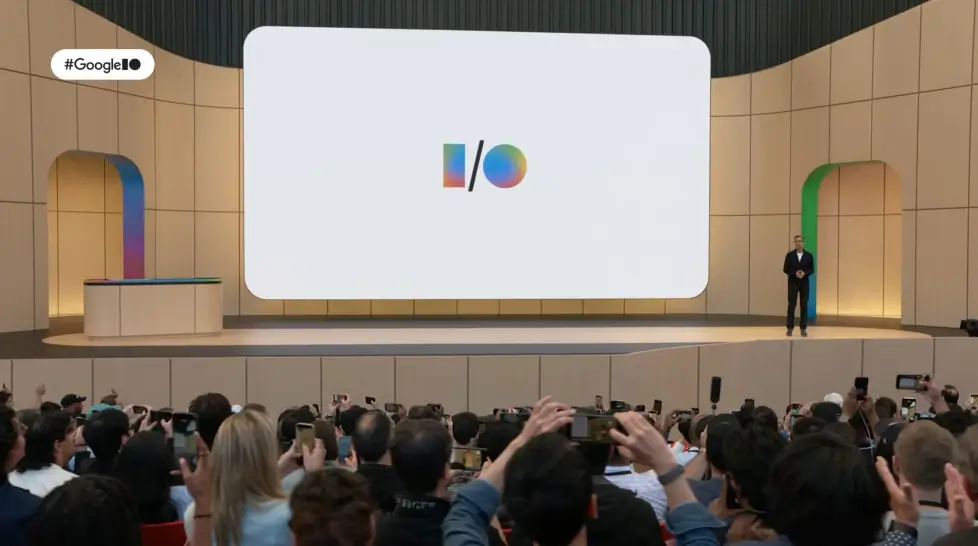
Forget chatbots. Google spent Google I/O 2026 talking about agents. Agents that plan, agents that shop, agents that code, agents that watch your inbox at 3 a.m. while you sleep.
Sundar Pichai opened the keynote framing Gemini as the intelligence layer behind everything Google ships now. Search, Android, Workspace, YouTube, shopping, developer tools, creative apps. All of it stitched together through one agent-shaped vision.
And the scale numbers are honestly absurd.
Google said its products now process more than 3.2 quadrillion tokens per month, up 7x year over year. More than 8.5 million developers build with Google models every month. Model APIs handle around 19 billion tokens per minute. AI Overviews crossed 2.5 billion monthly active users. AI Mode passed 1 billion. The Gemini app hit 900 million. Users have generated more than 50 billion images with Nano Banana models.
That last number is the one that should sting OpenAI a bit.
Gemini 3.5 Flash leads the model lineup
The new flagship is Gemini 3.5 Flash. Google positioned it as a frontier model built for agentic coding, long-horizon workflows and real-world task execution. Google says it beats Gemini 3.1 Pro across almost all benchmarks while running four times faster than other frontier models measured by output tokens per second. It also costs less than half the price of comparable frontier models.
Pretty wild claim. But Google needs that speed advantage if agents are going to do actual work without users staring at a spinner.
Gemini Spark is the personal agent
Gemini Spark is the headline product. Google calls it a 24/7 personal AI agent powered by Gemini 3.5 and Google Antigravity, running on dedicated Google Cloud virtual machines. It plugs into Google tools first and will later connect to third-party tools through MCP. Trusted tester access opens this week and Google AI Ultra beta access lands in the U.S. next week.
The honest catch here. You’re trusting a Google VM to act on your behalf indefinitely. Privacy folks are already raising hands. But for power users, this is the thing.
Android Halo shows what the agent is doing
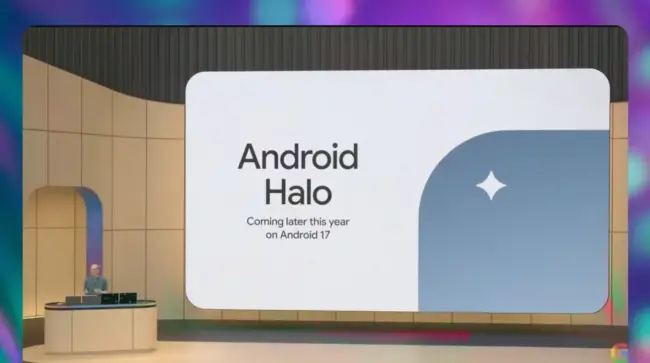
Android Halo is a new interface for showing live AI agent activity on your phone. It’s basically a status indicator for background agent work, so you can see when Gemini Spark or other agents are running tasks. That sounds small. It’s not. Trust in agents only works when you can see what they’re doing.
Search becomes generative
Search picked up information agents that work in the background 24/7, launching this summer for Google AI Pro and Ultra subscribers. Search is also using Gemini 3.5 Flash and Antigravity to generate custom UI, dashboards and mini app-style experiences inside the results page. You can dig into the specifics in our Google Search AI update breakdown.
Result pages aren’t static lists anymore. They’re built on demand for the question.
Universal Cart turns Google into one shopping layer
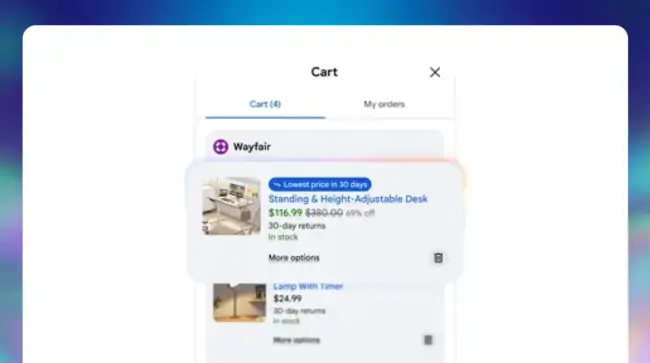
Google Universal Cart pulls Search, Gemini, YouTube and Gmail into a single AI shopping surface. It saves products, tracks prices, shows price history, monitors deals and flags back-in-stock items. Gemini reasoning sits underneath to actually compare options. The U.S. rollout begins this summer on Search and Gemini, then expands to YouTube and Gmail.
Amazon should be paying attention.
Antigravity 2.0 for developers
Google Antigravity 2.0 launched as a standalone desktop app and agent orchestration hub. It runs an optimized Gemini 3.5 Flash model that Google claims is 12x faster than other frontier models. Internal usage tells the story. Antigravity went from half a trillion tokens per day in March to more than three trillion tokens per day. That’s developers leaning in hard.
Gemini Omni and Google Pics for creative work
Gemini Omni is a new multimodal model family. Any input, any output. It’s launching with Gemini Omni Flash for video generation inside the Gemini app, Google Flow and YouTube Shorts. Developer and enterprise API access ships in the coming weeks.
Google Pics is the new creative side. It runs on the latest Nano Banana model and lets you start from a blank canvas or edit existing photos by treating every element as an independent editable object. If you’ve been using a third-party AI image generator, the workflow will feel familiar. The object-level editing is the part that’s actually new.
SynthID gets a transparency boost
SynthID has now watermarked more than 100 billion images and videos plus 60,000 years of audio assets. SynthID detector access inside Gemini is being paired with Content Credentials verification across Search and Chrome. So you’ll be able to check whether something is AI generated from inside the browser itself.
Useful. Long overdue.
Workspace and YouTube get voice and discovery
Google Docs Live brings Gemini voice into Workspace. You can brainstorm out loud and turn spoken ideas into documents, rolling out this summer for subscribers. Voice editing and similar tools are coming to Gmail and Keep.
Ask YouTube is the new Gemini-powered discovery feature. It finds videos for you and jumps straight to the most relevant moment. Testing is underway with a broader U.S. rollout this summer.
The infrastructure bill is enormous
None of this runs on hope. Google said annual capex was $31 billion in 2022 and is expected to hit about $190 billion this year. The eighth-generation TPU 8t and TPU 8i chips deliver up to 2x better performance per watt, and TPU 8t provides nearly three times the raw compute power of the previous generation.
That’s the bet. Agents need compute, and Google wants to own the stack from chip to cart.
If the next year plays out like the keynote suggests, the default way you use the internet stops being a search bar and starts being an agent that already knows what you want.
Frequently Asked Questions
Google shifted its messaging from AI chatbots to AI agents. Gemini Spark, a 24/7 personal AI agent powered by Gemini 3.5 and Antigravity, is the headline product since it can plan, monitor tasks and act on your behalf across Google tools.
Gemini 3.5 Flash is Google’s new frontier model for agentic coding and long-horizon tasks. Google says it beats Gemini 3.1 Pro across almost all benchmarks, runs four times faster than other frontier models by output tokens per second and costs less than half the price of comparable frontier models.
Universal Cart is a unified AI shopping layer that connects Search, Gemini, YouTube and Gmail. It can save products, track prices, monitor deals, show price history and flag back-in-stock updates. The U.S. rollout starts this summer on Search and Gemini before expanding to YouTube and Gmail.